
Since getting a site meter and seeing how much of my blog traffic comes from google searches, I’ve decided to write on a subject about which there is not much information on the web. It is also a regional issue (for Battle Ground, Washington and North Clark County) and the subject is religion so it fits well with my blog.
The subject is Laestadianism or Apostolic Lutheranism. North Clark County, in which Battle Ground is the largest city, has a large population of Apostolic Lutherans. They are mostly of Finnish descent. There are some different groups in the movement but the largest group in this area is the Old Apostolic Lutheran Church, a fundamentalist*, restorationist and, I would say, heretical Lutheran movement. They are usually called just “Apostolics” but two other, probably more popular names, are used. These are “bunhead” or “bunner.” The reason for this name is that most of the Old Apostolic women wear their hair in buns. I find the name “bunhead” to be too derogatory sounding but I am good friends with an ex-Apostolic who doesn’t see any problem with the term, at least when used by those who are or have been in an Apostolic Lutheran church. Other attributes of Apostolics are that they tend to have very large families, often of at least ten children and when they greet each other they say, “God’s peace.” Some of the funnier cultural characteristics of Apostolic Lutherans are that they tend to drink a lot of mountain dew, which in Battle Ground is also known as “bunner-beer” and many of the Apostolic young people have been known to wear almost exclusively quiksilver brand clothing. In Battle Ground the Apostolic young people are also known for hanging out in large numbers in the Fred Meyer's parking lot.
Most of the Apostolics I’ve known have been very kind people. I went to the church once with a good Apostolic friend when I was in middle school. All of the ex-Apostolics I know are fervent followers of Jesus Christ who have accepted the fullness of the gifts of the Holy Spirit. There are serious problems with the Old Apostolic Lutheran Church, though, and most of the ex-Apostolics I know would question whether many people in that church are actually even Christians. I trust these ex-Apostolic's judgment. I believe that the revival in Lapland which gave rise to Apostolic Lutheranism was a true act of God but since that time the movement has gone far wrong. This blog post will begin a series on Old Apostolic Lutheranism. My goals in this series are to shed light on a subject that I think many people in Clark County would find interesting but more importantly to reach out to Apostolics who are in a dark place and to let them know that the power of Christ is real and that it brings freedom and joy. My primary resource will be “The History of the Laestadian or Apostolic Lutheran Movement in America” by Uuras Saarnivaara. The book was kindly given to me by an Apostolic man whom I befriended while I worked at Barnes and Noble. I find part the preface of the book to be a good introduction to this series:
…God has led thousands of people to the saving knowledge of Christ through the Laestadian revival. But at the same time the powers of evil have endeavored to destroy this work of God and to break the bond of love between the children of God. Consequently the history of the Laestadian movement is an account of the great saving work of the Holy Spirit in its[sic] conflict with the deluding and disrupting work of the devil. A study of this history therefore brings to us both joy and sorrow.
*I hesitate to use the word "fundamentalist." Its definition is ambiguous and some liberals would probably consider me to be a "fundamentalist." One definition I've heard which I like is that a fundamentalist is any religious person who is more conservative than you are. When I use the word here I am referring to a highly legalistic way of living where the teachings of church eleders are not to be questioned.
Friday, July 20, 2007

Thursday, July 19, 2007
Summer wouldn't be complete without buckin' some hay
Well, I thought I had escaped the yearly ritual when I went down for the conference at Bethel in Redding. But alas, today my dad asked me to help him move some hay. I don't know why this is blog-worthy but I'm posting it anyways. In the picture you can see our barn, my dad getting a haybail I just handed to him and our little dog, Sunny, helping out.

Wednesday, July 18, 2007
The Mercy of the Fall
I have come to view the doctrine of the Fall as one of the most merciful and liberating doctrines in Christian theology. I'm not speaking of the event of the Fall in history. I would hesitate to label that event as merciful, although I do think that the freedom God gave to Adam and Eve, which enabled the Fall, was a great gift. A downplaying or outright rejection of the doctrine of the Fall in liberal "christianity" and some emerging-church circles is perhaps the characteristic in those movements which grieves me the most. G.K. Chesterton also found the doctrine of the fall to be liberating from the sickly optimism of his time. In his wonderful book, "Orthodoxy," Chesterton writes:
But the important matter was this, that it [the doctrine of the Fall] entirely reversed the reason for optimism. And the instant the revearsal was made it felt like the abrupt ease when a bone is put back in the socket. I had often called myself an optimist, to avoid the too evident blasphemy of pessimism. But all the optimism of the age had been false and disheartening for this reason, that it had always been trying to prove that we fit in the world. The Christian optimism is based on the fact that we do not fit in the world. I had tried to be happy by telling myself that man is an animal, like any other which sought its meat from God. But now I was really happy, for I had learnt that man is a monstrosity. I had been right in feeling all things as odd, for I myself was at once worse and better than all things. The optimist's pleasure was prosaic, for it dwelt on the naturalness of everything; the Christian pleasure was poetic, for it dwelt in the unnaturalness of everything in the light of the supernatural. The modern philosopher had told me again and again that I was in the right place, and I had still felt depressed even in acquiescence. But I had heard that I was in the wrong place, and my soul sang for joy, like a bird in spring. The knowledge found out and illuminated forgotten chambers in the dark house of infancy. I knew now why grass had always seemed to me as queer as the green beard of a giant, and why I could feel homesick at home.
I certainly identify with Chesterton in the liberation I find in the doctrine of the Fall. It is through that doctrine that I can see that my "citizenship is in heaven," and that I am an "alien and a stranger on the earth." There was a time when I tried the kind of optimism that Chesterton describes, and it failed me... miserably. It was only through realizing that the world is screwed-up and that we're screwed-up that liberation, sanctification and victory are possible. If everything is a-O.K. then what's the point of coming to Christ in the first place? When we realize that we are sinners deserving of hell-fire and that we are slaves needing to be set free then we can come to Christ for salvation and deliverance. He will not disappoint.
But the important matter was this, that it [the doctrine of the Fall] entirely reversed the reason for optimism. And the instant the revearsal was made it felt like the abrupt ease when a bone is put back in the socket. I had often called myself an optimist, to avoid the too evident blasphemy of pessimism. But all the optimism of the age had been false and disheartening for this reason, that it had always been trying to prove that we fit in the world. The Christian optimism is based on the fact that we do not fit in the world. I had tried to be happy by telling myself that man is an animal, like any other which sought its meat from God. But now I was really happy, for I had learnt that man is a monstrosity. I had been right in feeling all things as odd, for I myself was at once worse and better than all things. The optimist's pleasure was prosaic, for it dwelt on the naturalness of everything; the Christian pleasure was poetic, for it dwelt in the unnaturalness of everything in the light of the supernatural. The modern philosopher had told me again and again that I was in the right place, and I had still felt depressed even in acquiescence. But I had heard that I was in the wrong place, and my soul sang for joy, like a bird in spring. The knowledge found out and illuminated forgotten chambers in the dark house of infancy. I knew now why grass had always seemed to me as queer as the green beard of a giant, and why I could feel homesick at home.
I certainly identify with Chesterton in the liberation I find in the doctrine of the Fall. It is through that doctrine that I can see that my "citizenship is in heaven," and that I am an "alien and a stranger on the earth." There was a time when I tried the kind of optimism that Chesterton describes, and it failed me... miserably. It was only through realizing that the world is screwed-up and that we're screwed-up that liberation, sanctification and victory are possible. If everything is a-O.K. then what's the point of coming to Christ in the first place? When we realize that we are sinners deserving of hell-fire and that we are slaves needing to be set free then we can come to Christ for salvation and deliverance. He will not disappoint.
Tuesday, July 17, 2007
The Joy of the Lord
Last Friday night I was in prayer and worship with my friends Josh, Lacie, Stacy, and Ross who had been the preacher at Fan The Flame. I had started the evening at the Seppala's barn in Hockinson in a time of soaking prayer. On my drive there I had prayed to God something like, "Lord, I have had small tastes of your Presence, of your joy, but tonight I want to be overwhelmed, let me be drunk in your Presence." I got the feeling even up at the barn that the evening would be different. I felt God's Presence strongly and I felt deep and powerful joy in his Presence. We drove down to Ross' house in Vancouver and we began a time of worship and soaking. I was sitting on a couch with my eyes closed, singing a song of praise to God. I don't want to claim a "vision" in what happened next. It's hard to tell where the imagination ends and where the supernatural vision begins. Whatever it was, I believe that God was in it and I believe that He communicated truth to me in it...
I saw myself in heaven. I was prostrate, on my face in worship, in the presence of God. I knew that this was the proper posture. It was all very serious. But then something happened. Jesus came up to me and He touched my outstretched hand. I looked up at Him and he was laughing joyfully. I mean, seriously, out-of-control joyfully. He was even dancing around. He looked at me and what I felt he communicated was, "Reality is this good. It is so good that I can't do anything but be overwhelmed by joy." Another aspect of it was that the way He looked at me, it was almost like it was our secret, this joy. It was so intimate, so friendly. Another thing I remember is that He showed me His hand. It was nail scarred. I had the feeling that He was showing me that He had bought me and that His scars showed that all that seriousness had been taken care of. Now was the time to rejoice. I began to laugh. I was just sitting there on that couch, praise music playing, just laughing for like five minutes. I kept thinking about the way He looked at me and the way He laughed. I've had that image of Jesus in my mind since Friday. I am very thankful to Him for it.
I saw myself in heaven. I was prostrate, on my face in worship, in the presence of God. I knew that this was the proper posture. It was all very serious. But then something happened. Jesus came up to me and He touched my outstretched hand. I looked up at Him and he was laughing joyfully. I mean, seriously, out-of-control joyfully. He was even dancing around. He looked at me and what I felt he communicated was, "Reality is this good. It is so good that I can't do anything but be overwhelmed by joy." Another aspect of it was that the way He looked at me, it was almost like it was our secret, this joy. It was so intimate, so friendly. Another thing I remember is that He showed me His hand. It was nail scarred. I had the feeling that He was showing me that He had bought me and that His scars showed that all that seriousness had been taken care of. Now was the time to rejoice. I began to laugh. I was just sitting there on that couch, praise music playing, just laughing for like five minutes. I kept thinking about the way He looked at me and the way He laughed. I've had that image of Jesus in my mind since Friday. I am very thankful to Him for it.
Sunday, July 15, 2007
Mt. Adams #10...and 11
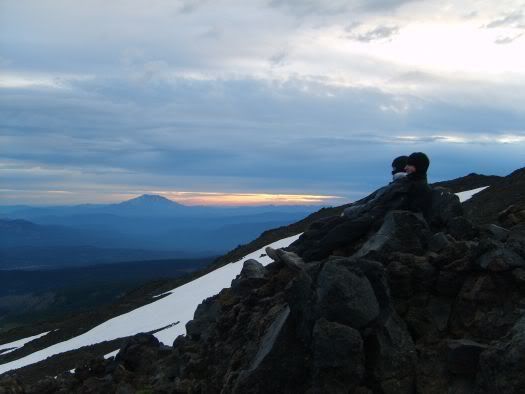
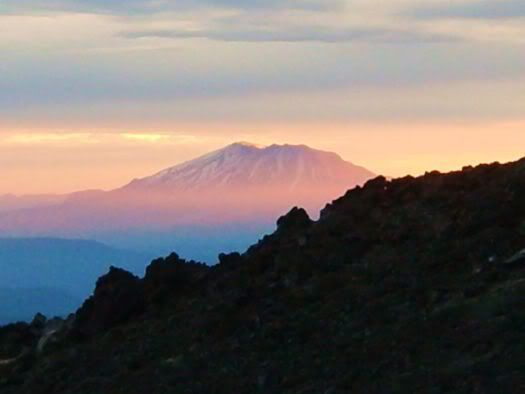
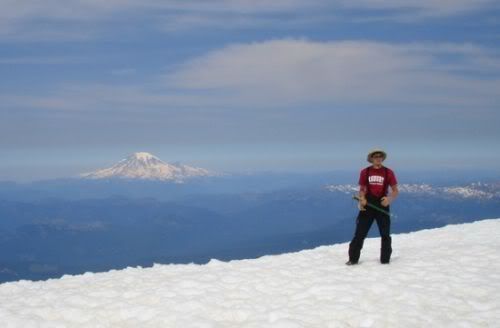
I just returned home from climbing Mt. Adams for the second time in five days. Mt. Adams is the mountain you see in my "header" area of my blog. It is a 12,256 ft. extinct volcano in the Cascade Range of southern Washington state. It has become a tradition of mine to climb the mountain with friends. I've climbed it once a year every year since my senior year of high school in 1998. This year I climbed it twice, which made my tenth and eleventh ascents. It is also a tradition of mine to pray the 104th Psalm up on the mountain. This year I was blessed to climb with my brother and some of my best friends. Some pictures from the climbs are interspersed below with the words of the 104th Psalm.
 less the LORD, O my soul!
O LORD my God, You are very great: You are clothed with honor and majesty,
Who cover Yourself with light as with a garment, Who stretch out the heavens like a curtain.
He lays the beams of His upper chambers in the waters,
Who makes the clouds His chariot, Who walks on the wings of the wind,
 You who laid the foundations of the earth, So that it should not be moved forever,
You covered it with the deep as with a garment; The waters stood above the mountains.
At Your rebuke they fled; At the voice of Your thunder they hastened away.
They went up over the mountains; They went down into the valleys, To the place which You founded for them.
You have set a boundary that they may not pass over, That they may not return to cover the earth. He sends the springs into the valleys; They flow among the hills.
They give drink to every beast of the field; The wild donkeys quench their thirst.
By them the birds of the heavens have their home; They sing among the branches.
He waters the hills from His upper chambers; The earth is satisfied with the fruit of Your works.
He causes the grass to grow for the cattle, And vegetation for the service of man, That he may bring forth food from the earth,
And wine that makes glad the heart of man, Oil to make his face shine, And bread which strengthens man’s heart.
The trees of the LORD are full of sap, The cedars of Lebanon which He planted,
Where the birds make their nests; The stork has her home in the fir trees.
The high hills are for the wild goats; The cliffs are a refuge for the rock badgers. He appointed the moon for seasons; The sun knows its going down.
You make darkness, and it is night, In which all the beasts of the forest creep about.
The young lions roar after their prey, And seek their food from God.
When the sun rises, they gather together And lie down in their dens.
Man goes out to his work And to his labor until the evening. O LORD, how manifold are Your works! In wisdom You have made them all. The earth is full of Your possessions—
This great and wide sea, In which are innumerable teeming things, Living things both small and great.
There the ships sail about; There is that Leviathan Which You have made to play there.
These all wait for You, That You may give them their food in due season.
What You give them they gather in; You open Your hand, they are filled with good.
You hide Your face, they are troubled; You take away their breath, they die and return to their dust.
You send forth Your Spirit, they are created; And You renew the face of the earth.
May the glory of the LORD endure forever; May the LORD rejoice in His works.
He looks on the earth, and it trembles; He touches the hills, and they smoke.
 I will sing to the LORD as long as I live; I will sing praise to my God while I have my being.
May my meditation be sweet to Him; I will be glad in the LORD.
May sinners be consumed from the earth, And the wicked be no more.
Bless the LORD, O my soul! Praise the LORD!
* * * * * * * * * * * * * * * * * *
 less the LORD, O my soul!
 O LORD my God, You are very great: You are clothed with honor and majesty,
Who cover Yourself with light as with a garment, Who stretch out the heavens like a curtain.
He lays the beams of His upper chambers in the waters,
Who makes the clouds His chariot, Who walks on the wings of the wind,
Who makes His angels spirits, His ministers a flame of fire.
 You who laid the foundations of the earth, So that it should not be moved forever,
 You covered it with the deep as with a garment; The waters stood above the mountains.
At Your rebuke they fled; At the voice of Your thunder they hastened away.
They went up over the mountains; They went down into the valleys, To the place which You founded for them.
You have set a boundary that they may not pass over, That they may not return to cover the earth.
 He sends the springs into the valleys; They flow among the hills.
 They give drink to every beast of the field; The wild donkeys quench their thirst.
By them the birds of the heavens have their home; They sing among the branches.
He waters the hills from His upper chambers; The earth is satisfied with the fruit of Your works.
He causes the grass to grow for the cattle, And vegetation for the service of man, That he may bring forth food from the earth,
And wine that makes glad the heart of man, Oil to make his face shine, And bread which strengthens man’s heart.
The trees of the LORD are full of sap, The cedars of Lebanon which He planted,
Where the birds make their nests; The stork has her home in the fir trees.
The high hills are for the wild goats; The cliffs are a refuge for the rock badgers.
 He appointed the moon for seasons; The sun knows its going down.
 You make darkness, and it is night, In which all the beasts of the forest creep about.
The young lions roar after their prey, And seek their food from God.
When the sun rises, they gather together And lie down in their dens.
Man goes out to his work And to his labor until the evening.
 O LORD, how manifold are Your works! In wisdom You have made them all. The earth is full of Your possessions—
This great and wide sea, In which are innumerable teeming things, Living things both small and great.
There the ships sail about; There is that Leviathan Which You have made to play there.
These all wait for You, That You may give them their food in due season.
What You give them they gather in; You open Your hand, they are filled with good.
You hide Your face, they are troubled; You take away their breath, they die and return to their dust.
You send forth Your Spirit, they are created; And You renew the face of the earth.
May the glory of the LORD endure forever; May the LORD rejoice in His works.
He looks on the earth, and it trembles; He touches the hills, and they smoke.
 I will sing to the LORD as long as I live; I will sing praise to my God while I have my being.
 May my meditation be sweet to Him; I will be glad in the LORD.
May sinners be consumed from the earth, And the wicked be no more.
Bless the LORD, O my soul! Praise the LORD!
Monday, July 9, 2007
And Now for Something Completely Different
I'll be mountain climbing for the next few days so I wanted to post something before I left. I was thinking about posting a cool quote from John Calvin on holiness, which I will probably post later, but I decided to post something I've wanted to put on here for a long time. I read a lot of good books my last semester at Asbury. But one quote from one book has stayed with me. It is from a book I read in Jerry Walls' class on theodicy called "The Doors of the Sea." It is by Eastern Orthodox theologian, David Bentley Hart...
Until that final glory, however, the world remains divided between two kingdom, where light and darkness, life and death grow up together and await the harvest. In such a world, our portion is charity, and our sustenance is faith, and so it will be until the end of days. As for comfort, when we seek it, I can imagine none greater than the happy knowledge that when I see the death of a child, I do not see the face of God but the face of his enemy. Such faith might never seem credible to someone like Ivan Karamazov, or still the disquiet of his conscience, or give him peace in place of rebellion, but neither is it a faith that his arguments can defeat: for it is a faith that set us free from optimism long ago and taught us hope instead. Now we are able to rejoice that we are saved not through the immanent mechanisms of history and nature, but by grace; that God will not unite all of history's many strands in one great synthesis, but will judge much of history false and damnable; that he will not simply reveal the sublime logic of fallen nature, but will strike off the fetters in which creation languishes; and that, rather than showing us how the tears of a small girl suffering in the dark were necessary for the building of the Kingdom, he will instead raise her up and wipe away all tears from her eyes - and there shall be no more death, nor sorrow, nor crying, nor any more pain, for the former things will have passed away, and he that sits upon the throne will say, "Behold, I make all things new."
Obviously I am not a Calvinist. Dr. Walls cured me of that. Don't get me wrong, I have great respect for John Calvin and I like many Calvinists. My favorite line is, "God will not unite all of history's many strands in one great synthesis, but will judge much of history false and damnable." There are things in this world that happen and exist and are contrary to the will of God. It is only a hope in God's victory in the Eschaton that can make sense of the world we live in. I thank God for the tokens of His promise that we receive in this life.
Until that final glory, however, the world remains divided between two kingdom, where light and darkness, life and death grow up together and await the harvest. In such a world, our portion is charity, and our sustenance is faith, and so it will be until the end of days. As for comfort, when we seek it, I can imagine none greater than the happy knowledge that when I see the death of a child, I do not see the face of God but the face of his enemy. Such faith might never seem credible to someone like Ivan Karamazov, or still the disquiet of his conscience, or give him peace in place of rebellion, but neither is it a faith that his arguments can defeat: for it is a faith that set us free from optimism long ago and taught us hope instead. Now we are able to rejoice that we are saved not through the immanent mechanisms of history and nature, but by grace; that God will not unite all of history's many strands in one great synthesis, but will judge much of history false and damnable; that he will not simply reveal the sublime logic of fallen nature, but will strike off the fetters in which creation languishes; and that, rather than showing us how the tears of a small girl suffering in the dark were necessary for the building of the Kingdom, he will instead raise her up and wipe away all tears from her eyes - and there shall be no more death, nor sorrow, nor crying, nor any more pain, for the former things will have passed away, and he that sits upon the throne will say, "Behold, I make all things new."
Obviously I am not a Calvinist. Dr. Walls cured me of that. Don't get me wrong, I have great respect for John Calvin and I like many Calvinists. My favorite line is, "God will not unite all of history's many strands in one great synthesis, but will judge much of history false and damnable." There are things in this world that happen and exist and are contrary to the will of God. It is only a hope in God's victory in the Eschaton that can make sense of the world we live in. I thank God for the tokens of His promise that we receive in this life.
Sunday, July 8, 2007
Discernment, Dwarfs and Digory
Okay, I know the title's a bit dorky but I couldn't help it. A series on discernment has materialized on this blog and now I have something to write that I really believe is from God. Of course, use your discernment as you read, but as I prepared to write it I got the funny feeling that God was saying, "Hey Matt, open your eyes, you've had it wrong." So here goes:
When is "discernment" really just cynicism? When is "discernment" just bowing down to the lies of enlightenment, materialistic thought? When does "discernment" get in the way of the supernatural and the unexpected? Can what we might think of as "discernment" really be a lie from Satan that keeps us away from God's blessing? I think it can. I think fear of the new and the miraculous and a cynical state of mind, unwilling to accept amazing and unexpected blessings from God, is often labeled as a discerning mind. I am guilty of all of these things. Lord help me to repent.
In "The Last Battle," the final book in his "The Chronicles of Narnia," C.S. Lewis includes a peculiar story of a group of Dwarfs who have come into Heaven from Narnia. They enter through a stable door. Chapter thirteen of The Last Battle begins with King Tirian, Peter, Lucy and Edmund Pevensie, Eustace, and Lord Digory and Lady Polly beginning to explore the paradise that is Heaven. Tirian and Eustace, like the dwarfs, entered Heaven through the stable door from Narnia. The Pevensies, Digory and Polly were all killed in a train accident on earth and are now in Heaven. Heaven is described by Lewis, thus: "They stood on grass, the deep blue sky was overhead, and the air which blew gently on their faces was that of a day in early summer. Not far away from them rose a grove of trees, thickly leaved, but under every leaf there peeped out gold or faint yellow or purple or glowing red of fruits such as no one has seen in our world. . . Everyone raised up his hand to pick the fruit he best liked the look of, and then everyone paused for a second. This fruit was so beautiful that each felt 'It can't be meant for me . . . surely we're not allowed to pluck it.' 'It's all right,' said Peter. 'I know what we're all thinking. But I'm sure, quite sure, we needn't. I've a feeling we've got to the country where everything is allowed.' 'Here goes then!' said Eustace. And they all began to eat. What was the fruit like? Unfortunately no one can describe it. All I can say is that, compared with those fruits, the freshest grapefruit you've ever eaten was dull, and the juiciest orange was dry, and the most melting pear was hard and woody, and the sweetest wild strawberry was sour."
Lewis' description here is somewhat reminiscent of his description in "The Great Divorce," with the fruit in Heaven being more real than any fruit on earth.
But the Dwarfs also entered Heaven through the stable door. Lucy leads the group to the Dwarfs and this is what they see: "They weren't strolling about or enjoying themselves . . . nor were they lying down and having a rest. They were sitting very close together in a little circle facing one another. They never looked round or took any notice of the humans till Lucy and Tirian were almost near enough to touch them. Then the Dwarfs all cocked their heads as if they couldn't see anyone but were listening hard and trying to guess by the sound what was happening.
'Look out!' said one of them in a surly voice. 'Mind where you're going. Don't walk into our faces!'
'All right!' said Eustace indignantly. 'We're not blind. We've got eyes in our heads.'
'They must be darn good ones if you can see in here,' said the same Dwarf whose name was Diggle.
'In where?' asked Edmund.
'Why you bone head, in here of course,' said Diggle. 'In this pitch-black, poky, smelly little hole of a stable.'
'Are you blind?' said Tirian.
'Ain't we all blind in the dark!' said Diggle.
'But it isn't dark, you poor stupid Dwarfs,' said Lucy. 'Can't you see? Look up! Look around! Can't you see the sky and the trees and the flowers? Can't you see me?'
'How in the name of all Humbug can I see what ain't there? And how can I see you any more than you can see me in this pitch darkness?'
'But I can see you,' said Lucy. 'I'll prove I can see you. You've got a pipe in your mouth.'
'Anyone that knows the smell of baccy could tell that,' said Diggle.
'Oh the poor things! This is dreadful,' said Lucy. Then she had an idea. She stooped and picked some wild violets. 'Listen, Dwarf,' she said. 'Even if your eyes are wrong, perhaps your nose is all right: can you smell that?' She leaned across and held the fresh, damp flowers to Diggle's ugly nose. But she had to jump back quickly in order to avoid a blow from his hard little fist.
'None of that!' he shouted. 'How dare you! What do you mean by shoving a lot of filthy stable-litter in my face? There was a thistle in it too.'
So the Dwarfs, who in reality are in Heaven, have so deluded themselves and are so cynical that they can't see the blue sky, the grass, the trees or even the light of heaven. They also have their rationalizations ready. When Lucy tries to prove to them that they are in the light by telling Diggle that he's smoking a pipe he just explains it away by saying that she could smell the tobacco. Because of the Dwarfs' unbelief, they can't see Heaven even though they are in it.
For you poor souls unfamiliar with Narnia, Aslan is a Great Lion and the character who represents Jesus Christ, God incarnate. Soon after the events described above, Aslan comes along. Here's the scene: ". . . but as he spoke the earth trembled. The sweet air grew suddenly sweeter. A brightness flashed behind them. All turned. Tirian turned last because he was afraid. There stood his heart's desire, huge and real, the golden Lion, Aslan himself, and already the others were kneeling in a circle round his forepaws and burying their hands and faces in his mane as he stooped his great head to touch them with his tongue. Then he fixed his eyes upon Tirian, and Tirian came near, trembling, and flung himself at the Lion's feet, and the Lion kissed him and said, 'Well done, last of the Kings of Narnia who stood firm at the darkest hour.'"
Isn't that a beautiful picture of intimacy with God?
Lucy asks Aslan to help the Dwarfs. Aslan answers, "I will show you both what I can, and what I cannot, do."
"He came close to the Dwarfs and gave a low growl: low, but it set all the air shaking. But the Dwarfs said to one another, 'Hear that? That's the gang at the other end of the stable. Trying to frighten us. They do it with a machine of some kind. Don't take any notice. They won't take us in again!'
Aslan raised his head and shook his mane. Instantly a glorious feast appeared on the Dwarfs knees: pies and tongues and pigeons and trifles and ices, and each Dwarf had a goblet of good wine in his right hand. But it wasn't much use. They began eating and drinking eagerly enough, but it was clear that they couldn't taste it properly. They thought they were eating and drinking only the sort of things you might find in a stable. One said he was trying to eat hay and another said he had got a bit of an old turnip and a third said he'd found a raw cabbage leaf. And they raised golden goblets of rich red wine to their lips and said 'Ugh! Fancy drinking dirty water out of a trough that a donkey's been at! Never thought we'd come to this.' . . . 'Well at any rate there's no Humbug here. We haven't let anyone take us in. The Dwarfs are for the Dwarfs.'
'You see,' said Aslan. 'They will not let us help them. They have chosen cunning instead of belief. Their prison is only in their own minds, yet they are in that prison; and so afraid of being taken in that they cannot be taken out. But come, children. I have other work to do.'"
Does it not break your heart? It didn't break my heart before but it does now for some reason. I think it's because I'm beginning to think most Christians, including myself, are like those Dwarfs. We're so cunning and so afraid of being 'taken in.' And why do we feel this way? Because of pride and fear. We don't want to look foolish. It seems foolish to believe that people get drunk in the Spirit and see angels and visit heaven. It seems foolish that God would cause something to materialize in thin air and fall on the worshippers at a church in California. But, "Has not God made foolish the wisdom of the world?" "For since in the wisdom of God the world through its wisdom did not know him, God was pleased through the foolishness of what was preached to save those who believe." Are we not, "Fools for Christ?" But, "The foolishness of God is wiser than man's wisdom." If we say we believe the Bible and in the Bible people saw and conversed with angels, became like dead men in God's presence, received revelations and were caught up to the third heaven then why do we doubt now? Why do I doubt now? Lord, free me from my unbelief! When we trust people we risk being hurt. We risk believing lies. We risk admiring a fake. But does that mean that we should not trust? That we should not believe? That is the choice many of us make. But what are we missing? What feasts that God is laying before us do we see as 'stable litter?' What new wine do we see as trough-water? And what is the feast? What is the wine? The Psalmist says, "You are my portion, O Lord." Jesus said, "For my Flesh is real food and my Blood is real drink. Whoever eats my flesh and drinks my blood remains in me, and I in him." God is our portion.
Jesus said to Thomas, to Thomas who wouldn't believe the words of his own brothers and sisters that his Lord had been raised. He said to Thomas who had heard Jesus' own words predicting his resurrection, "blessed are those who have not seen and yet have believed." It all seemed too good to be true to Thomas. He knew that those other disciples wanted so badly for the resurrection to be true - maybe they had just imagined something and convinced one another of its truth. Thomas knew that people don't normally rise from the dead. But he also knew his Lord. He also knew the words of his Lord. He had been in close company with the other disciples for years. Yet he didn't trust any of that. It was too good to be true. He wasn't going to be 'taken in.' Thankfully Thomas' case wasn't as bad as the Dwarfs in the story. He did believe after he saw and touched his Lord and there proclaimed, "My Lord and my God!"
Let us not be so cunning in our "discernment" that we choose it over belief.
Amen
When is "discernment" really just cynicism? When is "discernment" just bowing down to the lies of enlightenment, materialistic thought? When does "discernment" get in the way of the supernatural and the unexpected? Can what we might think of as "discernment" really be a lie from Satan that keeps us away from God's blessing? I think it can. I think fear of the new and the miraculous and a cynical state of mind, unwilling to accept amazing and unexpected blessings from God, is often labeled as a discerning mind. I am guilty of all of these things. Lord help me to repent.
In "The Last Battle," the final book in his "The Chronicles of Narnia," C.S. Lewis includes a peculiar story of a group of Dwarfs who have come into Heaven from Narnia. They enter through a stable door. Chapter thirteen of The Last Battle begins with King Tirian, Peter, Lucy and Edmund Pevensie, Eustace, and Lord Digory and Lady Polly beginning to explore the paradise that is Heaven. Tirian and Eustace, like the dwarfs, entered Heaven through the stable door from Narnia. The Pevensies, Digory and Polly were all killed in a train accident on earth and are now in Heaven. Heaven is described by Lewis, thus: "They stood on grass, the deep blue sky was overhead, and the air which blew gently on their faces was that of a day in early summer. Not far away from them rose a grove of trees, thickly leaved, but under every leaf there peeped out gold or faint yellow or purple or glowing red of fruits such as no one has seen in our world. . . Everyone raised up his hand to pick the fruit he best liked the look of, and then everyone paused for a second. This fruit was so beautiful that each felt 'It can't be meant for me . . . surely we're not allowed to pluck it.' 'It's all right,' said Peter. 'I know what we're all thinking. But I'm sure, quite sure, we needn't. I've a feeling we've got to the country where everything is allowed.' 'Here goes then!' said Eustace. And they all began to eat. What was the fruit like? Unfortunately no one can describe it. All I can say is that, compared with those fruits, the freshest grapefruit you've ever eaten was dull, and the juiciest orange was dry, and the most melting pear was hard and woody, and the sweetest wild strawberry was sour."
Lewis' description here is somewhat reminiscent of his description in "The Great Divorce," with the fruit in Heaven being more real than any fruit on earth.
But the Dwarfs also entered Heaven through the stable door. Lucy leads the group to the Dwarfs and this is what they see: "They weren't strolling about or enjoying themselves . . . nor were they lying down and having a rest. They were sitting very close together in a little circle facing one another. They never looked round or took any notice of the humans till Lucy and Tirian were almost near enough to touch them. Then the Dwarfs all cocked their heads as if they couldn't see anyone but were listening hard and trying to guess by the sound what was happening.
'Look out!' said one of them in a surly voice. 'Mind where you're going. Don't walk into our faces!'
'All right!' said Eustace indignantly. 'We're not blind. We've got eyes in our heads.'
'They must be darn good ones if you can see in here,' said the same Dwarf whose name was Diggle.
'In where?' asked Edmund.
'Why you bone head, in here of course,' said Diggle. 'In this pitch-black, poky, smelly little hole of a stable.'
'Are you blind?' said Tirian.
'Ain't we all blind in the dark!' said Diggle.
'But it isn't dark, you poor stupid Dwarfs,' said Lucy. 'Can't you see? Look up! Look around! Can't you see the sky and the trees and the flowers? Can't you see me?'
'How in the name of all Humbug can I see what ain't there? And how can I see you any more than you can see me in this pitch darkness?'
'But I can see you,' said Lucy. 'I'll prove I can see you. You've got a pipe in your mouth.'
'Anyone that knows the smell of baccy could tell that,' said Diggle.
'Oh the poor things! This is dreadful,' said Lucy. Then she had an idea. She stooped and picked some wild violets. 'Listen, Dwarf,' she said. 'Even if your eyes are wrong, perhaps your nose is all right: can you smell that?' She leaned across and held the fresh, damp flowers to Diggle's ugly nose. But she had to jump back quickly in order to avoid a blow from his hard little fist.
'None of that!' he shouted. 'How dare you! What do you mean by shoving a lot of filthy stable-litter in my face? There was a thistle in it too.'
So the Dwarfs, who in reality are in Heaven, have so deluded themselves and are so cynical that they can't see the blue sky, the grass, the trees or even the light of heaven. They also have their rationalizations ready. When Lucy tries to prove to them that they are in the light by telling Diggle that he's smoking a pipe he just explains it away by saying that she could smell the tobacco. Because of the Dwarfs' unbelief, they can't see Heaven even though they are in it.
For you poor souls unfamiliar with Narnia, Aslan is a Great Lion and the character who represents Jesus Christ, God incarnate. Soon after the events described above, Aslan comes along. Here's the scene: ". . . but as he spoke the earth trembled. The sweet air grew suddenly sweeter. A brightness flashed behind them. All turned. Tirian turned last because he was afraid. There stood his heart's desire, huge and real, the golden Lion, Aslan himself, and already the others were kneeling in a circle round his forepaws and burying their hands and faces in his mane as he stooped his great head to touch them with his tongue. Then he fixed his eyes upon Tirian, and Tirian came near, trembling, and flung himself at the Lion's feet, and the Lion kissed him and said, 'Well done, last of the Kings of Narnia who stood firm at the darkest hour.'"
Isn't that a beautiful picture of intimacy with God?
Lucy asks Aslan to help the Dwarfs. Aslan answers, "I will show you both what I can, and what I cannot, do."
"He came close to the Dwarfs and gave a low growl: low, but it set all the air shaking. But the Dwarfs said to one another, 'Hear that? That's the gang at the other end of the stable. Trying to frighten us. They do it with a machine of some kind. Don't take any notice. They won't take us in again!'
Aslan raised his head and shook his mane. Instantly a glorious feast appeared on the Dwarfs knees: pies and tongues and pigeons and trifles and ices, and each Dwarf had a goblet of good wine in his right hand. But it wasn't much use. They began eating and drinking eagerly enough, but it was clear that they couldn't taste it properly. They thought they were eating and drinking only the sort of things you might find in a stable. One said he was trying to eat hay and another said he had got a bit of an old turnip and a third said he'd found a raw cabbage leaf. And they raised golden goblets of rich red wine to their lips and said 'Ugh! Fancy drinking dirty water out of a trough that a donkey's been at! Never thought we'd come to this.' . . . 'Well at any rate there's no Humbug here. We haven't let anyone take us in. The Dwarfs are for the Dwarfs.'
'You see,' said Aslan. 'They will not let us help them. They have chosen cunning instead of belief. Their prison is only in their own minds, yet they are in that prison; and so afraid of being taken in that they cannot be taken out. But come, children. I have other work to do.'"
Does it not break your heart? It didn't break my heart before but it does now for some reason. I think it's because I'm beginning to think most Christians, including myself, are like those Dwarfs. We're so cunning and so afraid of being 'taken in.' And why do we feel this way? Because of pride and fear. We don't want to look foolish. It seems foolish to believe that people get drunk in the Spirit and see angels and visit heaven. It seems foolish that God would cause something to materialize in thin air and fall on the worshippers at a church in California. But, "Has not God made foolish the wisdom of the world?" "For since in the wisdom of God the world through its wisdom did not know him, God was pleased through the foolishness of what was preached to save those who believe." Are we not, "Fools for Christ?" But, "The foolishness of God is wiser than man's wisdom." If we say we believe the Bible and in the Bible people saw and conversed with angels, became like dead men in God's presence, received revelations and were caught up to the third heaven then why do we doubt now? Why do I doubt now? Lord, free me from my unbelief! When we trust people we risk being hurt. We risk believing lies. We risk admiring a fake. But does that mean that we should not trust? That we should not believe? That is the choice many of us make. But what are we missing? What feasts that God is laying before us do we see as 'stable litter?' What new wine do we see as trough-water? And what is the feast? What is the wine? The Psalmist says, "You are my portion, O Lord." Jesus said, "For my Flesh is real food and my Blood is real drink. Whoever eats my flesh and drinks my blood remains in me, and I in him." God is our portion.
Jesus said to Thomas, to Thomas who wouldn't believe the words of his own brothers and sisters that his Lord had been raised. He said to Thomas who had heard Jesus' own words predicting his resurrection, "blessed are those who have not seen and yet have believed." It all seemed too good to be true to Thomas. He knew that those other disciples wanted so badly for the resurrection to be true - maybe they had just imagined something and convinced one another of its truth. Thomas knew that people don't normally rise from the dead. But he also knew his Lord. He also knew the words of his Lord. He had been in close company with the other disciples for years. Yet he didn't trust any of that. It was too good to be true. He wasn't going to be 'taken in.' Thankfully Thomas' case wasn't as bad as the Dwarfs in the story. He did believe after he saw and touched his Lord and there proclaimed, "My Lord and my God!"
Let us not be so cunning in our "discernment" that we choose it over belief.
Amen
Friday, July 6, 2007
Didache on Discernment
Intro:
So I was working today, doing construction and continuing to ponder discernment. And suddenly I remembered something I had read long ago in a wonderful work called the Didache. Didache simply means "Teaching" in Greek and it is a short work that may have been written as early as the first century. When the canon of Scripture was being formulated, some Church Fathers even argued for its inclusion in the New Testament. I think texts like the Didache, even though they should never be placed on the same level of Scripture when it comes to authority, should have a privileged place when we are seeking the will of God.
Teachings of the Didache:
The Didache is a very interesting text. An important theme is the idea of the "Two Ways." The Didache says, "Two Ways there are, one of Life and one of Death, and there is a great difference between the Two Ways." The way of life is summarized as, "First, love God who made you, secondly, your neighbor as yourself: do not do to another what you do not wish to be done to yourself." One thing that would be nice if the Didache had been included in the NT would be its prohibition of abortion. The Didache says, "do not kill a fetus by abortion, or commit infanticide." Although I'm sure that even if this were in the Bible, the loving, tolerant liberals would just ignore it like they do the rest of Scripture... Okay off the liberal thing... Later there is an interesting instruction on the sacraments. The instruction on baptism says that the candidate should fast prior to their baptism and that it should take place in running water. If no running water is available then cold water should be used and if there's not enough water to dunk then a baptism could be done by pouring water on the head thrice and baptizing in the name of the Father and of the Son and of the Holy Spirit. There is a powerful and, I think, correct admonition against open communion, "Let no one eat and drink of your Eucharist but those baptized in the name of the Lord; to this, too, the saying of the Lord is applicable: 'Do not give to dogs what is sacred.'"
Discernment:
The Didache begins its teaching on discernment by saying, "should the teacher himself be a turncoat and teach a different doctrine so as to undermine (this teaching), do not listen to him. But if he promotes holiness and knowledge of the Lord, welcome him as the Lord." So discernmet begins with knowing what good doctrine is and avoiding any teacher who does not believe in and teach good doctrine. In the context of the Didache, good doctrine seems to be the teaching on the "Two Ways" which encompasses Christ's moral teaching and also the instruction on the sacraments. Good doctrine is also described here as a doctrine of holiness and the knowledge of the Lord.
Now to the interesting stuff: "Moreover, if any prophet speaks in ecstasy, do not test him or entertain any doubts; for any sin may be forgiven, but this sin cannot be forgiven. However, not everyone speaking in ecstasy is a prophet, except he has the ways of the Lord about him. So by their ways must the true and the false prophet be distinguished. No prophet who in an ecstasy orders the table spread, must partake of it; otherwise, he is a false prophet. Any prophet that teaches truth, yet does not live up to his teaching, is a false prophet. When a prophet, once approved as genuine, does something by way of symbolizing the Church in an earthly manner, yet does not instruct others to do all that he himself is doing, he is not liable to your judgment, for his judgment rests with God. After all, the Prophets of old acted in the same manner. But if anyone says in ecstasy, "Give me money," or something else, you must not listen to him. However, should he tell you to give something for others who are in need, let no one condemn him."
There's a lot of good stuff there. The first admonition is strong and convicting, equating doubting the words of a prophet with the unforgivable sin of blaspheming the Holy Spirit seen in the NT. The primary standard of discernment seems to be the way the prophet lives his life. Does the prophet have, "the ways of the Lord about him?" Even if a prophet teaches truth, if he hypocritically does not live up to that teaching, he must be considered a false prophet. Instances where a prophet says something for their own gain, like ordering food (having a table spread before them) or asking for money are fundamentals in distinguishing true from false prophets.
For true prophets, the Didache establishes a high place of honor: "Every genuine prophet who is willing to settle among you is entitled to his support. Likewise, every genuine teacher is, like a laborer, entitled to his support. Therefore, take all first fruits of vintage and harvest, of cattle and sheep, and give these first fruits to the prophets; for they are your high priests."
In discerning who should be in leadership in the Church, the Didache teaches, "elect for yourselves bishops and deacons, men who are an honor to the Lord, of gentle disposition, not attached to money, honest and well-tried; for they, too, render you the sacred service of the prophets and teachers."
Near the end of the text is a warning and a retelling of our blessed hope, "For in the last days the false prophets and corrupters will come in swarms; the sheep will turn into wolves, and love will turn to hate. When lawlessness is on the increase, men will hate and persecute and betray one another; and the Deceiver of this world will appear, claiming to be the Son of God, and give striking exhibitions of power; the earth will be given over into his hands, and he will perpetrate outrages such as have never taken place since the world began. Then humankind will undergo the fiery test, and many will lose their faith and perish; but those who stand firm in their faith will be saved by none other than the Accursed. And then the proofs of the truth will appear; the first proof, an opening of the heavens; the next proof, the sounding of the trumpet; and the third, the resurrection of the dead - not all indeed, but in accordance with the saying: The Lord will come and all the saints with Him. Finally, the world will behold the Lord riding the clouds in the sky."
May we heed this warning and stand firm even in the midst of false prophets and wolves.
Amen
So I was working today, doing construction and continuing to ponder discernment. And suddenly I remembered something I had read long ago in a wonderful work called the Didache. Didache simply means "Teaching" in Greek and it is a short work that may have been written as early as the first century. When the canon of Scripture was being formulated, some Church Fathers even argued for its inclusion in the New Testament. I think texts like the Didache, even though they should never be placed on the same level of Scripture when it comes to authority, should have a privileged place when we are seeking the will of God.
Teachings of the Didache:
The Didache is a very interesting text. An important theme is the idea of the "Two Ways." The Didache says, "Two Ways there are, one of Life and one of Death, and there is a great difference between the Two Ways." The way of life is summarized as, "First, love God who made you, secondly, your neighbor as yourself: do not do to another what you do not wish to be done to yourself." One thing that would be nice if the Didache had been included in the NT would be its prohibition of abortion. The Didache says, "do not kill a fetus by abortion, or commit infanticide." Although I'm sure that even if this were in the Bible, the loving, tolerant liberals would just ignore it like they do the rest of Scripture... Okay off the liberal thing... Later there is an interesting instruction on the sacraments. The instruction on baptism says that the candidate should fast prior to their baptism and that it should take place in running water. If no running water is available then cold water should be used and if there's not enough water to dunk then a baptism could be done by pouring water on the head thrice and baptizing in the name of the Father and of the Son and of the Holy Spirit. There is a powerful and, I think, correct admonition against open communion, "Let no one eat and drink of your Eucharist but those baptized in the name of the Lord; to this, too, the saying of the Lord is applicable: 'Do not give to dogs what is sacred.'"
Discernment:
The Didache begins its teaching on discernment by saying, "should the teacher himself be a turncoat and teach a different doctrine so as to undermine (this teaching), do not listen to him. But if he promotes holiness and knowledge of the Lord, welcome him as the Lord." So discernmet begins with knowing what good doctrine is and avoiding any teacher who does not believe in and teach good doctrine. In the context of the Didache, good doctrine seems to be the teaching on the "Two Ways" which encompasses Christ's moral teaching and also the instruction on the sacraments. Good doctrine is also described here as a doctrine of holiness and the knowledge of the Lord.
Now to the interesting stuff: "Moreover, if any prophet speaks in ecstasy, do not test him or entertain any doubts; for any sin may be forgiven, but this sin cannot be forgiven. However, not everyone speaking in ecstasy is a prophet, except he has the ways of the Lord about him. So by their ways must the true and the false prophet be distinguished. No prophet who in an ecstasy orders the table spread, must partake of it; otherwise, he is a false prophet. Any prophet that teaches truth, yet does not live up to his teaching, is a false prophet. When a prophet, once approved as genuine, does something by way of symbolizing the Church in an earthly manner, yet does not instruct others to do all that he himself is doing, he is not liable to your judgment, for his judgment rests with God. After all, the Prophets of old acted in the same manner. But if anyone says in ecstasy, "Give me money," or something else, you must not listen to him. However, should he tell you to give something for others who are in need, let no one condemn him."
There's a lot of good stuff there. The first admonition is strong and convicting, equating doubting the words of a prophet with the unforgivable sin of blaspheming the Holy Spirit seen in the NT. The primary standard of discernment seems to be the way the prophet lives his life. Does the prophet have, "the ways of the Lord about him?" Even if a prophet teaches truth, if he hypocritically does not live up to that teaching, he must be considered a false prophet. Instances where a prophet says something for their own gain, like ordering food (having a table spread before them) or asking for money are fundamentals in distinguishing true from false prophets.
For true prophets, the Didache establishes a high place of honor: "Every genuine prophet who is willing to settle among you is entitled to his support. Likewise, every genuine teacher is, like a laborer, entitled to his support. Therefore, take all first fruits of vintage and harvest, of cattle and sheep, and give these first fruits to the prophets; for they are your high priests."
In discerning who should be in leadership in the Church, the Didache teaches, "elect for yourselves bishops and deacons, men who are an honor to the Lord, of gentle disposition, not attached to money, honest and well-tried; for they, too, render you the sacred service of the prophets and teachers."
Near the end of the text is a warning and a retelling of our blessed hope, "For in the last days the false prophets and corrupters will come in swarms; the sheep will turn into wolves, and love will turn to hate. When lawlessness is on the increase, men will hate and persecute and betray one another; and the Deceiver of this world will appear, claiming to be the Son of God, and give striking exhibitions of power; the earth will be given over into his hands, and he will perpetrate outrages such as have never taken place since the world began. Then humankind will undergo the fiery test, and many will lose their faith and perish; but those who stand firm in their faith will be saved by none other than the Accursed. And then the proofs of the truth will appear; the first proof, an opening of the heavens; the next proof, the sounding of the trumpet; and the third, the resurrection of the dead - not all indeed, but in accordance with the saying: The Lord will come and all the saints with Him. Finally, the world will behold the Lord riding the clouds in the sky."
May we heed this warning and stand firm even in the midst of false prophets and wolves.
Amen
Discernment, discernment, discernment...
If you keep up with this blog, you have noticed a change lately. I would say that there has been a revolution in my mind and I'm still trying to figure out exactly what that revolution is. Maybe some of you have been troubled by my "slide" into charismatic Christianity. I've actually quite enjoyed the slide but I do have some serious reservations about the way things are in some charismatic circles. For me it all comes down to discernment. What is from God and what is not? I think a very wrong attitude to have is that every time someone claims a revelation or vision or prophecy or whatever we just accept it. This should not be. Things need to be tested. I'm still trying to figure this out. Charismatic Christianity has a great strength in that it is open to the miraculous and so the miraculous does occur. People are healed, people see visions, people prophesy and other weird stuff happens. But I feel like I see a serious weakness in a lack of discernment and a willingness to accept whatever claims people make about healings, visions and so on. I'm glad that I have friends whom I can trust and that these friends have experienced some of those various things. Heck, I've experienced them so I can't deny them. The way I feel right now makes me so thankful for my experience in the Anglican Church and it drives me to stay in that place. Even though I love the Foursquare church I go to when I'm home, I think that Pentecostalism + Congregationalism it probably not a good thing. I should read Cantalamessa's book on the baptism of the Holy Spirit. Maybe that will help. Well, I hope you enjoyed my rambling. God bless you all.
Monday, July 2, 2007
The Making of a Charismatic or “Fan the Flame”
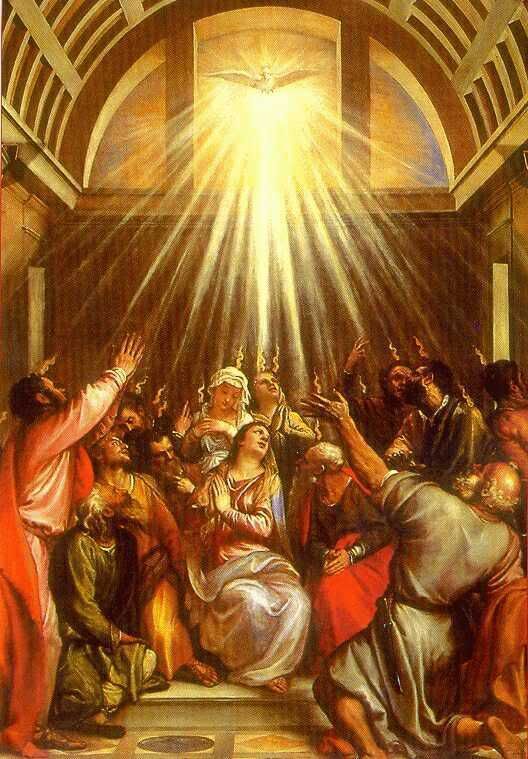 Some of you who know me well know a bit of my Christian journey. I was baptized as an infant at Ontario United Methodist Church in Ontario, Oregon and I asked Jesus to be my Savior when I was 13. I remained a very immature but zealous Christian until college. In college I wanted to party so I decided to become a liberal “Christian.” God by his grace brought me back to the faith with some relationships, some books and with my own inner struggle. For the next few years, while I was a youth pastor at a United Methodist church, I tried to embrace mainstream Evangelicalism. It was actually a very good time where God’s presence was very evident in my life and where I began to ask the Holy Spirit to take control of my prayer. I felt called to seminary and went to Asbury where I was richly blessed by God.
God messed with me a lot during my first year at Asbury. I came out of that year broken. I struggled regularly with fits of depression and anxiety. I told a friend that I felt “weak.” I also struggled with doubt a lot during that time. There were weeks when I had to will myself into being a Christian. But during that time God continued to meet me, I would say, miraculously. When I returned home to Washington from seminary in 2006 I was invited by a good friend and brother in Christ, Josh Monen, to a church service that was a ministry of a local Pentecostal church. The ministry was called ‘Fan the Flame,’ taken from 2nd Timothy 1:6 - “For this reason, I remind you to fan into flame the gift of God, which is in you through the laying on of my hands.” I was suffering the first time I went. The service was held in a barn in the countryside not far from my house. We worshipped and there was a short message. Then there was a prayer time. A family went up to be prayed for and I imagined that the service would wind down and I would talk with my friend for a while and go home. But that’s not what happened. As I said, I was suffering. I was standing about halfway back in the congregation, minding my own business, when the guy who had preached, Ross, pointed at me and said something like, “you need prayer.” He couldn’t have been more right. I went up and balled my eyes out before a whole congregation of people (something I had never done before and couldn’t imagine myself doing) while brothers and sisters layed on hands, prayed, prophesied and spoke in tongues. I asked for healing and I received it. I was free of the frightening depression and anxiety that had plagued me for months and it has not returned since. That was the first miracle of that summer. Fan the Flame continued to amaze me throughout the summer. I’ve commented to Josh that Fan the Flame has been the only place where, on a Monday, I was excited about what might happen at church on Sunday that week. There were a number of amazing things that happened that summer but one other thing is worthy of note. I’ve mentioned it on this blog before. One Sunday we had a guest preacher at Fan the Flame. I came to the service as usual not knowing what to expect but excited about what God had in store for that night. After he had preached, the guest preacher began telling random people from the congregation to stand up. He would then lay his hand on their head, pray, speak in tongues and prophesy. I am a skeptic. My natural reaction to every situation is to find a naturalistic explanation. I was skeptical about this preacher. I didn’t want him to prophesy over me because I loved Fan the Flame and I knew that if he said something that wasn’t true, I would be devastated. He walked down the center aisle, pointed at me and said, “stand up!” I obeyed and he began to speak in tongues and prophesy. He said something to the effect of “you have been hurt by a church in the past and you still need to forgive them.” First of all, I was happy that what he said was true. But I was also able to remain skeptical because I thought to myself, “lot’s of people have been hurt by churches - he could probably have said that to three quarters of the people here.” The fact was that I had been hurt by a church - the liberal church I had grown up in. But I thought I had forgiven the people there. After the service I went up to the preacher, Frank, and I let him know that what he said was true but that I felt like I had already forgiven those people. He looked at me and said something like, “I have something more to tell you - you are bitter about that church and that bitterness is affecting your theology.” I was surprised about having been contradicted but two words he used surprised me. The two words were “bitter” and “theology.” As I thought about it, I realized that this guy who didn’t even know me told me the same thing that the guy who knows me best, Blake Brodien, had been telling me for months at seminary. Blake had been telling me that I was bitter about liberalism and this ‘prophet’ now said the same thing. The other word that struck me was “theology.” This struck me because I was studying theology - and bitterness certainly was affecting it. In fact, I’d be willing to say that bitterness about liberalism was the primary force driving my theology. As you can imagine, that is a pretty unhealthy source of theology. As I thought about this true prophet’s words I grew more and more amazed. I was so amazed that I later asked my friend Josh whether he had talked to this preacher about me before the service - he hadn’t. On further thought, another aspect of the words of this prophet which struck me was that what he had to say was what I really needed to hear. At the service, before he prophesied over me, I had thought about what God would probably want to say to me through a prophet. I thought about the obvious struggles with sin in my life. I thought about lust among other things. But the struggle that this prophet hit me with was something that was very real but also something that I was in denial about. Hearing that I was bitter from him made me finally listen up after my best friend had been telling me the same thing for months. I would be lying if I said that the bitterness was gone - it’s not. But I’m aware of it and I realize that stoking it and feeding on it is keeping me in a kind of bondage that God wants me to be free of.
In my experience with Pentecostalism, I have seen little of what seems so problematic to those on the outside. That’s not to say that the problems aren’t real. But in my experience, Pentecostals are a group of people who value intimacy with God above all else, who believe the Bible and who are willing to live self-sacrificial lives. They are also aware of the marvelous and miraculous ways in which God acts in people’s lives today and they expect miracles in their churches. I believe that God honors this openness to His power by doing amazing things in Pentecostal churches.
Subscribe to:
Posts (Atom)

