Showing posts with label Apostolic Lutheranism. Show all posts

Wednesday, December 22, 2010

Nunc dimittis


In the quote below Lars Levi Laestadius, the great Swedish Lutheran revival leader, expresses the hope of the repentant sinner, that they would see "the Lord's Christ." Laestadius here must be taken to mean that the repentant who desire a savior will see Christ spiritually in this life when God gives them the grace to believe on Him. It is not that he was speaking of the time when all will see Christ at His return to judge the living and the dead. This is clear because near the end of the quote he speaks of those few who already "have seen Christ." As is often the case with Laestadius, perhaps because of poor translations, there is a sentence which I don't understand which reads, "They must also come into the temple through the effect of the Spirit, in that covenant when the Lord's Christ is carried in there." It is obviously a reference to Simeon being in the Temple and Christ being carried there by His parents but I'm not sure how it applies to the individual believer today.


But, on the whole, I felt that this was a good Advent quote and also appreciated the fact that he mentions one of the verses from Job I wrote about in my last post.


Then with better confidence than before he can say to the servant of self-righteousness, "I know that my Redeemer liveth, and that He shall stand at the latter day upon the earth: And though after my skin worms destroy this body, yet in my flesh shall I see God." And as that saint Job had received that blessed assurance, that in his flesh he shall see God, so also old Simeon had received that assurance from the Holy Spirit that he should not taste death before he had seen the Lord's Christ. And the same assurance is given even yet to all the sorrowful, penitent, and doubting souls who await the Consolation of Israel that they shall see the Lord's Christ before they leave the world. But in that seeing is needed the same kind of patience in tribulation as Job, the same kind of waiting and longing after the Lord's Christ as Simeon, for no one can receive that assurance from the Holy Spirit that he shall see God in the flesh, who has not awaited the Consolation of Israel in sorrow, penitence, and faith. And those few souls who await the Consolation of Israel in spiritual poverty, and who have the heartfelt desire that they can see Christ before they die, will soon receive that blessed assurance from the Spirit that they will not taste of death before they have seen the Lord's Christ in the flesh. They must also come into the temple through the effect of the Spirit, in that covenant when the Lord's Christ is carried in there. You sorrowful, penitent and doubting ones, have you waited a long time in spiritual poverty for the Consolation of Israel? Have you received that assurance from the Holy Spirit that you shall see Christ? And you few souls who have seen Christ and carried Him in your arms, pray as old Simeon, "Lord now lettest thou thy servant depart in peace, according to thy word: For mine eyes have seen thy salvation, which thou hast prepared before the face of all the people. A light to lighten the Gentiles, and the glory of thy people Israel." Hear thou Consolation of Israel, the sigh of all the sorrowful, penitent, doubting and believing.


- Lars Levi Laestadius from his Sermon No. 65B from his Kirkkopostilla 1876


Friday, September 24, 2010

Kautokeino Opprøret


Just before leaving for Ft. Bliss I received a DVD I had been debating about whether or not to buy for a while. The DVD is the Norwegian film Kautokeino Opprøret, about a small rebellion which took place in Lapland in the far north of Norway in 1852.

Anyone who’s read this blog for a while knows that a part of church history I’m very interested in is the Laestadian revival which took place in Lapland in the 19th century. I’m also interested in the current churches which are descended from this revival, the Laestadian and Apostolic Lutherans. I grew up around many of these Apostolic Lutherans and while certain sects in this movement have some theological problems I believe many are faithful Christians and I’ve been blessed to hear preaching in an Apostolic Lutheran church and worship with these brothers and sisters.


The film begins by portraying the ruination which alcoholism brought to the Lapp or Sami people in Kautokeino. It also introduces the Norwegian settlers in the area who profited from this alcoholism with their sale of liquor. One of the most powerful scenes is early in the film where the main characters, a young Sami family, make a trip to Karesuvanto on the border of Sweden and Finland. They arrive in Karesuvanto to the ringing of church-bells and find all the shops closed. A local says, “Come to the church. Laestadius is speaking.” They proceed to the church where the Laestadian revival is in its earliest infancy. The character Mathis, a reindeer herder who had gone far down the path of alcoholism and is now either drunk or severely hungover, at first plans to sleep in his sled while his wife and brother head for the church. As Laestadius preaches, Mathis enters the church to hear his own path of destruction being described in the sermon. Mathis stops in the center aisle of the church standing dumbstruck as Laestadius thunders before him. In a powerful moment Laestadius walks up to Mathis, shakes him, and commands him to be free of alcohol. I will write about some of the problems with the film in a moment but this scene will be disappointing to any Christian as the gospel is not preached. This is unfortunate because I think Laestadius was a great preacher of the gospel. After being rebuked by the preacher, Mathis falls to the floor - it is left up to the interpretation of the viewer whether this was because of some overwhelming spiritual experience or simply his own level of intoxication taking its toll. Laestadius lays his hand on the chest of the young Lapp and prays, “Lord, I beseech Thee, give him the strength to confess his sins to those nearest to him and to You so his soul may be liberated from that which burns inside him.” The young family then returns to Kautokeino with the supplies they had come to Karesuvanto for and also written sermons of Laestadius.


After the return to Kautokeino the young family begins spreading the word they had heard preached in Karesuvanto. Revival comes to the village and the tavern, once full, is now empty. This sets up the enmity which would grow between the Sami people and the Norwegians who owned the tavern and general store and held power in the village. The conflict between the Laestadian Sami and the Norwegian settlers would grow to the point of a riot or “opprøret” where two would be killed. In the chance that someone who reads this ends up watching the film I won’t give away any more of the plot.


As with any film made by non-Christians where the subject matter is religion and specifically Christianity there are inevitable problems. I’m assuming that the film-makers in this case were not Christian based on the spiritual state of Scandinavia, but I could be incorrect in this assumption. While the film did seem sympathetic to Laestadius and the revival, it portrayed things in such a way as to be palatable to the very secular and post-Christian culture of Scandinavia. The name Jesus is never mentioned by the character of Laestadius or the awakened Christians in Kautokeino. Instead Jesus’ name is mentioned only by the corrupt Norwegian state-church pastor who comes to Kautokeino to get the rebellious Sami under control. This corrupt pastor quotes John 14:6 where Jesus reveals Himself as “the way, and the truth, and the life,” a very non-PC passage, just after beating an elderly Sami woman with a cane. As opposed to this pastor who is often heard speaking of Jesus and seen brandishing a Bible, the newly Laestadian Sami are usually heard uttering vague sounding spiritual platitudes which would be much more acceptable sounding to the typical post-modern film-watcher. Other than the philosophic problems with the film there are some fake-looking CGI wolves at one point.


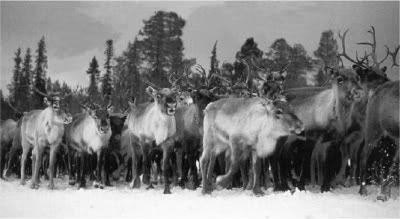
Even with all of these criticisms, I had a great time watching this film. As I wrote earlier, it is sympathetic to Laestadius and the early Laestadians, even if they are somewhat incorrectly portrayed. The acting is good and the scenes of Lapland and reindeer herding are very beautiful. So overall I think this was a very well-made film. There is one somewhat questionable scene but other than that the film is also very clean. I would recommend it to anyone who is interested in the Laestadian revival.


From the Laestadian point of view another problem may be that these people in Kautokeino were not even accepted as genuine children of the revival by the leaders in early Laestadianism. It makes sense that the early Laestadians would want to distance themselves from the Sami in Kautokeino as they probably already looked suspicious to the governments of Finland, Sweden and Norway along with the state-churches in those countries. It wouldn’t help to be linked to a group of people who had been involved in a violent uprising. Juhani Raattamaa, who took the reigns of the revival after the death of Laestadius, made reference to Kautokeino in his preface to the Church Postilla, a collection of Laestadius’ sermons. Raattamaa wrote, “It is possible that a false sect can appear beside the right [Church]. So it happened even in Kautokeino, of which the bishops of Norway wanted to accuse Laestadius. But it was not Laestadius’ fault because he didn’t have men whom he could send to Kautokeino at the right time when it still would have been possible to advise them.”


Perhaps Raattamaa is correct in implying that violence could have been avoided if a preacher could have been sent to Kautokeino. Whatever the case may be, the Kautokeino Rebellion is a very interesting event in the history of Lapland and the Laestadian revival. I think this film, even with the liberties it takes, is probably a good introduction to learning about these events.


Tuesday, February 2, 2010

Even as it happened in the New Testament


I always feel bad for Christians who don't believe that God works in all of the same mighty ways today as He did when the New Testament was being written. I love my cessationist brothers and I don't think of them as lesser Christians but I do think that they miss out on some of the blessings that belong to them as children of God. A while back I was on a blog frequented by many ex- and current Laestadian Christians and I saw one of the posters there arguing that God doesn't heal miraculously any more and also that Lutherans, specifically Laestadians, don't believe in divine healing. As I read Memoirs of Early Christianity in Northern Lapland I was happy to find an anecdote which contradicts this present Laestadian's views on God's provision for miraculous healing today. The testimony is that of Pietari Hankivaara, born in Kittila, Finland in 1834, a preacher who made journeys as far as St. Petersburg in Russia to preach the gospel. In 1871 Hankivaara went to preach in a village where there was an epidemic of typhoid fever. His testimony follows:
Along the way I began to feel illness, and upon arrival I was seriously ill, the mind was confused and the first night I was in a delirium of fever. The following day a very well known brother in the faith, Mikon-Juhani by name, arrived by my bedside, who having heard of my sickness was very unhappy.

At that time I was momentarily out of my delirium, and he asked me if I believed that even now it is possible to heal out of sickness through the power of faith even as it happened in the beginning of the New Testament. I replied: "Indeed, I believe that God is just as powerful now as in the time of Jesus." I said and assured him that with all my heart I believe so. Then he lowered himself down on his knees by my bedside, placed his hand over me, and prayed for my recovery. Instantly the pain and sickness from my body disappeared, and at the same time I arose from my bed, put my clothes on and went into the living room of the house, where services of devotion were in progress. Many people had gathered there, and they were amazed and delighted at my unexpected recovery. The great miracle of God was apparent to all, and thanks were expressed to the manifestly good God for His evidence of grace in this occurrence.

-Pietari Hankivaara (1834-1926)


Tuesday, January 12, 2010

The Precious Merits of Jesus


I've been reading Memoirs of Early Christianity in Northern Lapland and a few passages have especially caught my attention. One of these is a testimony written by Erkki Antti Juhonpieti. Juhonpieti was born in 1814 in Pajala, Sweden and would become a co-worker of Laestadius. In this passage he writes of his conversion and the struggles of the Christian life, powerfully proclaiming the gospel. The translation is a bit rough in places but I think it conveys the meaning well:
In the exchange between fear and hope I however seized ahold of the promises of grace in God's word. Now, I felt peace, rest and also joy; and realized that through the employment of Jesus' blood through faith my heart was broken. I went into the house to tell others of what great grace had taken place. For a whole week I was in such ecstasy that I knew nothing of sin or its effects. But then the feelings of corruption revived again to life. From these came occasion to doubt whether I was on the right track after all. Then faith and doubt fought their battle over sovereignty, but later I have learned to live solely by faith, contrary to the feelings of corruption, as the Apostle Paul, in his epistle, directs the Roman Christians to live.

During my walk of faith I have experienced so many kinds of sins and corruption in my members that I am unable to relate them all.

I have also felt God's grace and love, sometimes in a smaller measure, sometimes in larger portion. But faith I have strived to keep in a good conscience, though the feelings have been transitive, for in feelings there is no foundation for salvation, only in the precious merits of Jesus is there a full ransom for condemnation of sin and the fulfillment of the law.

- Erkki Antti Juhonpieti (1814-1900)

Saturday, January 9, 2010

Random Update #5


Writer's block... I don't feel I have the ability to write at this point but I don't want to completely neglect this blog. It's happened from time to time but I've always gotten over it before so this is probably not the end of Northwest Anglican. The "update"...

1. I had a good two weeks at home for Christmas break. The high point (or points) was 4 snowboarding trips I made with friends and family to Mt. Hood. On New Year's Eve I was on the mountain with a brother and a friend snowboarding (in the rain) until 2AM on New Year's Day.

2. Over the break I attended the Apostolic Lutheran Church in Hockinson and then met with the pastor during the week. It was a good experience. I hope to worship there again.

3. Lately I've been reading Memoirs of Early Christianity in Northern Lapland as a devotional book before I go to bed. The stories are interesting and there are some wonderful exhortations about the Gospel which renew my hope and remind me of how wonderful and merciful my Lord Jesus Christ is.

4. I'm on my family medicine rotation now at Riverside Community Regional Medical Center. It's been a good first week in which I've gotten to do and see a lot. On Tuesday I assisted on a circumcision.

5. As is often the case when I quit writing, this time has been for me a time of spiritual struggle. I read something which seemed to speak to my condition lately. I don't agree with every sentiment expressed but I think this article by Michael Spencer offers a corrective to some falsehoods often believed and preached in the church. Here's a quote:

I fall down. I get up….and believe. Over and over again. That’s as good as it gets in this world. This life of faith, is a battle full of weakness and brokenness. The only soldiers in this battle are wounded ones. There are moments of total candor- I am a “wretched man” living in a “body” of death. Denying this, spinning this, ignoring this or distorting this reality is nothing but trouble in the true Christian experience. The sin we are killing in Romans 8 is, in a sense, ourselves. Not some demon or serpent external to us. Our battle is with ourselves, and embracing this fact is the compass and foundation of the Gospel’s power in our lives.

Read it all here.

Sunday, December 27, 2009

Hyvää Joulua!


"I am the light of the world."

- Jesus Christ

May God, the Father of our Lord Jesus Christ, who has brought this light into the world through His only Son, give His grace that all sleeping ones would awaken to see the light of the world, that the eyes of all the blind would be opened to see light of the world, that all who are in darkness would see this light and that they, who see this light, would always remain in the light until that time that eternal light comes.

-Prayer of Lars Levi Laestadius, from a Christmas sermon

Sunday, October 25, 2009

Tidings from Lapland


I received another new book in the last few days, which I was also very excited to get as it is not available for purchase on the internet. The book is Memoirs of Early Christianity in Northern Lapland by Aatu Laitinen. The first couple of chapters on the lives of Laestadius and Raattamaa have been very interesting and I've enjoyed learning some details that I had never seen before. Raattamaa's testimony about his own conversion, which I read this morning, is something that I had seen before but I like it so much that I'll quote it here:

"But then it happened one day," we will continue Raattamaa's account, "that when I received the grace to gaze in faith and the Spirit at the bloodred thorn crowned King, power came from Him, and Christ's suffering affected in my soul a living power I had never known before. I believed my sins forgiven in the shed heart-sprinkling atoning blood, from which followed the recognition of the resurrected and living Lord Jesus. That which I had been seeking from afar was close at hand, and effected joy and peace in my soul. Now I was ashamed of my unbelief, and noticed that I had not previously believed from the heart."

-Juhani Raattamaa (1811-1899)

Wednesday, October 21, 2009

New Books!


I've been looking forward toward getting a few books I ordered from Monergism and they came in the mail today... Not that I'm going to have time to read them while on my surgery rotation. I've already read one of them - Richard Rushing's modernization of John Owen's The Mortification of Sin, which I borrowed from a friend. I liked the book so much though that I wanted my own copy to go over more slowly. I've been wanting to read something on the atonement lately so I also purchased J.I. Packer's and Mark Dever's In My Place Condemned He Stood.
The books below, The Journey of an Immigrant Awakening Movement in America by Kulla and A Godly Heritage, edited by Foltz and Yliniemi, are a couple on Apostolic Lutheranism that I got a month or two ago. They're not as recent as the acquisitions above but I was also very excited to get my hands on them. I pretty much devoured all the chapters that were of most interest to me during a few coffee shop visits and I used some of the info for my post below, "Lapin Maija."


Wednesday, October 7, 2009

Lapin Maija


Of all my reading on the Laestadian revival one character has intrigued me more than any other. Laestadius himself is a very interesting man, a scientist, a seminary trained Lutheran pastor and ultimately a man whom God would use to shake many in Lapland out of their spiritual slumber and death to repentance and life in Christ. Raattamaa is an interesting character, the man who carried the reigns of the revival from Laestadius and who held the revival together until his death. And there are numerous others such as John Lumijarvi that I would like to know more about. But as the title of this post suggests, the one by whom I've been the most intrigued is the Sami or Lapp woman named Mary or Maria. In Finnish she's known as Lapin Maija. Many believe that her real name was Milla Clementsdotter. It is of this woman that Laestadius wrote:
In the winter of 1844 I came to the Åsele region of Lapland in the capacity of inspector. I met a few Readers of the more moderate type there. Among them was a Sami girl named Maria who, after hearing my sermon from the altar, opened her whole heart to me. This simple girl had experienced the order of salvation in a way that was totally new to me. She had traveled far and wide, seeking light for her darkness. In her journeys she had at last encountered Pastor Brandell in Nora, and after she opened up her heart to him, Brandell released Maria from her doubts. Through him, Maria came to a living faith. And I thought to myself, "Here is a Mary who sits at the feet of Jesus. For the first time now," I thought, "I can see the way that leads to life; it was hidden from me until I had the privilege of speaking with Maria." Her simple account of her pilgrimage and experiences made such a deep impression on my heart that I, too, saw the light; that evening spent with Maria, I experienced a foretaste of the joy of heaven. But the pastors of Åsele did not understand Maria's heart, and even Maria recognized that they were not of this sheepfold. I shall remember the poor Maria as long as I live, and I hope to meet her in the brighter world beyond the grave.
This woman, who had been such a mystery to me, was part of a group which also had a mysterious title, the Readers. Until I recently acquired Carl A. Kulla's book, The Journey of an Immigrant Awakening Movement in America, I had a sense of who the Readers of Lapland were but this book has helped to clarify things. Kulla writes, "Pietism moved quickly from Germany to Sweden and the Baltic countries, where it met with strong opposition from the established church. . . Although Pietists remained within the state churches of their respective countries, they were a living church within the outward church, which caused Pietism to be in tension with the authorities." It seems then that the situation in the Scandinavian countries and Finland was not unlike the situation in the Church of England as the Methodist revival broke out in Britain and raised the ire of bishops and priests there. And as with the Methodist revival where John Wesley was converted to Christ under the tutelage of Moravians, it was also the Moravians who came to Scandinavia with the gospel. Kulla writes, "Already in 1731, and again in 1734, Moravian missionaries were spreading their influence throughout the land. From 1750 to the end of the century they permeated the religious life of Sweden." It was the spiritual descendants of these Moravian missionaries who were the Readers of Laestadius' time. Kulla writes, "Pietism was spread largely by the written word, the Bible, Luther's writings, and devotional writings from Lutheran heritage. Therefore the movement in Sweden received the name 'Lasare' which means 'Readers,' which name then became the general designation of all the awakenings."

With the presence of Christians like the Readers and also much depravity often seen in drunkenness and exploitation of the Sami, Mary was born into a Lapland of both light and much darkness. If her identity as Milla Clementsdotter is correct then it seems that early on at least, Mary experienced mostly the darkness of Lapland. But God by His grace and in His sovereignty would lead Mary to a living faith which would eventually be shared with Lars Levi Laestadius and ultimately millions of other "thirsty whelps of grace."

An account of the life of Milla Clementsdotter is found in an 1840 issue of the Swedish magazine, Nordisk Kyrkotidning. According to this account, Milla or Mary, which is a variant of that name, was born in Föllinge, Lapland on November 1st, 1815, although according to church records she was born on this date in 1813. Her father had lost his property because of his drunkenness and died after being assaulted when Mary was a child. Her mother remarried and Mary accompanied her mother and stepfather in their travels around Lapland. At the age of six, Mary was left with a farming family who agreed to teach her to read. Her time with this family seems to have been unhappy as she was harshly treated and was not educated well in reading as her mother had been promised. She seems to have moved from family to family as an orphan and during this time memorized the Lutheran catechism and took her first communion. Also during this time Mary witnessed much drunkenness in her caretakers and the sadness that this vice brought with it. After years of moving from family to family, including a time of working as a reindeer-herder, Mary's parents agreed to give her in marriage to a suitor many years her senior who was not known for his sobriety or Christianity. Mary successfully avoided the pursuit of this man and met some Sami "boys," as the biography calls them, who had been convicted of their sin and had heard the true gospel preached by Pastor Brandell of Nora. Of these boys the author writes, "even if their knowledge was not spectacular, their earnestness over the salvation of the soul was indeed all the greater. . . They were called madmen and fools by the apathetic people around them, but their admonitions, their mild, humble conduct, their devotion in prayer, to which they also exhorted her and with which she was so pleased, drew her to them and were a true joy to her in all her inner need and her present external distress."
Mary eventually came to live again with her mother and stepfather who had become "fisher-Lapps," along with her other siblings. During this time she was still troubled in conscience and had a dream of a group of people leaving a church, entering a cottage where there was merry-making and then being dragged to hell, chained together. In this dream Mary believed that she was warned by God of hell and admonished to carry this warning to her family. As would be expected, with her troubled conscience, Mary desired all the more to travel to Nora to hear the gospel preached by Pastor Brandell. Eventually Mary once again left her family to seek wages to send home. During these wanderings, when Mary was probably in her 20's, she fell very sick and was deathly ill for five weeks. After five weeks of bed-rest with a family who took her in, she eventually tried to hitch a ride to Nora to hear the gospel preached with a group of young people who were going to a dance. She was abandoned by this group and left stranded on a forest road on a winter night. Aila Foltz does a good job of describing this occurrence in the book A Godly Heritage, Foltz writes:
Falling snowflakes covered her as she lay unconscious on the road. It was Christmas time, and nobody was abroad at that hour in this sparsely settled region. A short distance from where Milla lay was an isolated farm. The farmer's son had gone visiting with the intention of returning the following day, but he was so overcome with anxiety about his family that he hitched up his sleigh and left for home the same evening. After traveling some distance, the horse shied and stopped abruptly. When the young man alighted to investigate, he found the Sami girl lying in the road covered with snow. He picked her up, laid her in his sleigh and took her home. In the warm house, she recovered enough to continue her journey the next day.
Mary eventually made it to Sollefteå where she met a Pastor Berglund, who had experienced living faith in Jesus Christ. Pastor Berglund encourged her to go on to Nora to hear Brandell preach the Word of God. Although the biography in Nordisk Kyrkotidning never tells of Mary finally making it to Nora, she must have eventually arrived there as Laestadius speaks of her hearing Pastor Brandell in Nora in his account of meeting her. It was in Nora where according to Laestadius, "Brandell had released her from her doubts and the girl was led by him to a living faith."

Not much is known about Mary after her fateful meeting with Laestadius. Foltz writes, "according to church records, she married Thomas Palsson, a Sami farmhand from Frostviken, a few years before she met Laestadius, and she gave birth to a daughter a few years later."

The account of Mary's life from Nordisk Kyrkotidning raises for me more questions than it answers. But one thing I am convinced of is that this was a woman of God in whose heart a wonderful work of grace had been done. Of his meeting with Mary, Laestadius wrote that she had opened her "whole heart" to him and, "I thought, 'I can see the way that leads to life.'" If opening one's heart to others leads to them seeing the way of repentance and faith in Christ I think it is obvious that it is Christ Himself who inhabits that heart.

I've been very happy to find books and websites that give an incomplete outline of Mary's life and the Readers but I would like to learn more about both. Although there are other resources out there I thought that this blog post might be interesting to anyone with a similar interest in the Laestadian revival or Mary of Lapland.


Tuesday, August 11, 2009

If our heart condemn us, God is greater

"And hereby we know that we are of the truth, and shall assure our hearts before him. For if our heart condemn us, God is greater than our heart, and knoweth all things. Beloved, if our heart condemn us not, then have we confidence toward God." (I John 3:19-21)


Here Apostle John describes a Christian’s trials, which are quite extraordinary, for matters of the heart are obscure to many. First he says, “if our heart condemn us, God is greater,” and by these words he reveals that a Christian’s heart may at times condemn him. When a vigilant Christian has dreadful temptations, which the devil effects in his flesh, and the devil shoots fiery darts from the flesh into the heart, evil thoughts occur in the mind and wicked lusts and desires are felt in the will, and, finally, self-righteousness rises as a stern and just accuser of the children of God, condemning them in this way: “How can you be a Christian with so much sin? A Christian should be holy and sinless, but you are like the devil himself.” When self-righteousness preaches thus in the reason, it appears to a Christian that his heart is condemning him, although the heart itself cannot condemn, but it is the devil of self-righteousness who condemns the children of God. And this cunning devil, who comes under the guise of truth, transforms himself into an angel of light [II Corinthians 11:14], and thus many of the penitent are deceived because they cannot understand that the one condemning the penitent is the devil. However, now Apostle John says, “If our heart condemn us, God is greater,” and by these words he shows that not a single Christian should believe his own heart, even if it does condemn him, but that instead he must believe God’s gracious promises, which show that Christ has come to save not the righteous but sinners [Matthew 9:13]...


...Rejoice, therefore, and be exceedingly glad, highly ransomed souls, for your reward is great in heaven! Rejoice, elect souls, for your accuser has been cast out of heaven. He no longer has authority to accuse you, for you have an Advocate with the Father, who intercedes on your behalf. Rejoice and be exceedingly glad, children of God, and cry with a loud voice that you have prevailed by the blood of the Lamb and by the word of his testimony. If you struggle in your most precious faith until death, soon you too can sing a hymn of victory with the angels and all redeemed souls. Soon you can sing a new song on Mount Zion and say, “Now is come salvation, and strength, and the kingdom of our God, and the power of his Christ, for the accuser of our brethren is cast down, which accused them before our God day and night. And they overcame him by the blood of the Lamb and by the word of their testimony.” Amen.


-Lars Levi Laestadius 1854 sermon


Tuesday, August 4, 2009

Apostolic Lutheran Videos


I was procrastinating today and found these videos on youtube. For any of my readers interested in the Laestadian (Apostolic Lutheran) movement, you might find these videos interesting.


Tuesday, December 30, 2008

Christmas Break Reading

I went into Christmas Break this year disappointed that there weren't any books high on my reading list. But thankfully, through the kindness of some friends, I have been supplied with some excellent material...

A good friend from Loma Linda has been reading Marsden's biography of Jonathan Edwards and he was kind enough to allow me to borrow it over the break. Marsden is such a great writer that I think I would enjoy reading about almost anything if it were written by him. But in the first third of his detailed and lengthy biography, Marsden has also succeeded in making me a great fan of Jonathan Edwards. It's sad that in our left-wing propaganda infused public schools the only thing most students ever hear of Edwards is his "Sinners in the hands of an angry God," which, by the way, I have heard is a great sermon. Edwards did not downplay God's wrath, as I think many modern preachers are mistaken to do, but he also did not downplay God's amazing goodness and love as seen in the death and resurrection of our Lord Jesus Christ. As I read Marsden's biography I have an idea for a blog-post seemingly every other page so I'm sure I'll write more on it later.

The second thing I've been reading this break was a Christmas present from my friend, Josh Monen, who, on Friday, asked a wonderful girl to marry him. Congratulations Josh. Josh was thoughtful enough to find me a book that you wouldn't find in any bookstore and one that would normally only be owned by a very select population. It covers a subject that I am very interested in though, Apostolic Lutheranism. It is actually the history of a single church in my county, located about six miles from my house in Hockinson. The book also covers a little of the history of the Laestadian movement in general and I was very excited to see that it has a little to say about a part of the history that I am very interested in but have had a hard time finding information on. As with the Edwards' book, I'm sure more blog posts will follow.


Wednesday, November 12, 2008

An Apostolic Lutheran Life


The following is a testimony of a man's life which was posted as a comment in one of my old posts on Apostolic Lutheranism. I was impressed when I read it and wanted to post it as a regular blog post. Thank you to whomever took the time to keep this record of your ancestor and to write it on my blog. It is a testimony to God's saving grace.

Johan Oberg was born June 24, 1862 in Rautalampi (Finland), the son of a sawmill worker Kalle Oberg. The forefather of the family had moved from Sweden several generations earlier. The family moved when Johan was 5 years old to work at the Saura Iron Factory in Karttula . There Johan had to begin working for wages at 8 years of age. People moved there from all over Finland to work at the factory and bad habits were common in their midst. Godly people were rare. Among them was Oberg’s mother whose maiden name was Maria Laulainen of Rautalampi. The mother was devoted to reading the Word of God and singing for she had a good voice and an ear for music. She often spoke to her children the Word of God and rebuked them of sin. The influence of his mother developed in Juho a sensitive conscience already in his childhood, but the mother could not lead her son any further. He grew in church piety, lacking the light of the Holy Spirit.

Nineteen year old Juho had to leave home not knowing where he would find employment. With tears, the mother saw her son off. His plan was to first go to his brother’s place in Taipalsaari. His brother had written that he had repented and was now a believer. From this, his family had gotten the impression that he had gone into some wild false doctrine and that Juho had reason to go and set him straight. While staying with his brother, Johan came into contact with the Laestadian movement. Listening to there preaching, he became convicted in his conscience that he also needed repentance or he was headed for hell. But this was not easy for the young man and an inward struggle went on from week to week. He had no peace at night or day. In 1884, a preacher named Manne Välikangas, was shot to death in Savitaipale. This touched Oberg’s heart so that he wanted to step in his place among the persecuted Christians even though he would lose his life because of the name of Jesus. He received strength to humble himself in repentance and receive the blessing of the forgiveness of his sins in Jesus Name and Blood. Then his soul was able to taste the power of the life to come and enjoy hidden manna. Several days after that, he saw the bloody wounds of the Son of God before his eyes. It went as a sword through his heart. He received power to confess his faith to the young and old. He was then asked to preach which he did in Finland for several years.

When he moved to America in 1892, he first settled in Calumet MI, but soon moved to Superior, WI, where he was for over a year and then moved to Cromwell, MN. In both places he was asked to speak at services and he also made preaching trips to other places which resulted in many people turning through repentance and faith from darkness to light. After 19 years in Cromwell, Oberg moved with his family to Cokato in 1912, and served as a pastor there for 8 years. There his wife, Maria (Mononen) Oberg from Lappeenranta, died. Oberg returned to Cromwell with his children. In 1921, he married Maria Carlson (Niemi). In 1929 he received a call from Laurium, MI, to be the pastor of the recently established congregation. He had already been voted to be the first chairman of the Apostolic Lutheran Church of America Federation. He served in this capacity to the general satisfaction of the people until 1942, when he requested retirement from the chairmanship and pastorate due to his high age and health issues. He was called to his eternal home on January 29, 1946.

Throughout his life, Oberg was a representative of Raattamaa’s evangelical Christian view, in which he had come to faith. He was a humble servant of God who spread the gospel lovingly and faithfully. He resisted, during his leadership, all religious concepts and principles which deviated from those of the Raattamaa era, whether they were toward a legalistic spirit or toward extreme evangelicalism. He also resisted efforts to limit God’s Kingdom to a certain faction. He had no aspirations and apparently no inclination to be a “leader” who demanded allegiance to himself. He did not seek the chairmanship but received it as from the hand of God and took care of the tasks belonging to his office to the best of his ability, allowing the general decisions of the “Christians” to guide him in his work.

Thursday, July 26, 2007

Apostolic Lutheranism: Theology and Practice

I had hoped to interview one of my ex-Apostolic friends for this post. Unfortunately schedules did not permit and I'm moving to southern California in less than a week so I decided to just go for it. I still plan on interviewing someone, maybe around Christmas time and then posting it here. Out of all of the posts in the series, this one disappoints me for some reason but I wanted to post something to sum things up a bit.

Authority
The basic authoritative documents for Apostolic Lutherans seem to be Luther's catechisms and the sermons of Laestadius. The Apostle's Creed also seems authoritative but in the 1870's John Takkinen, the Laestadian leader of the time, inserted the words "in Gethsemane" after the words "He descended into Hell." Apostolics would probably claim that the Bible is their ultimate source of authority but it is interpreted through the sometimes peculiar teachings of historic leaders in the Laestadian movement. Here we will explore some distinctive features of Apostolic doctrine and practice.

Exclusivity
Probably the most problematic theological distinctive of Old Apostolic Lutheranism is the belief that the Old Apostolic Lutheran Church is the one true church and that all those claiming to be Christians outside of their group are bound for hell. I have read that Old Apostolics might believe that there are true believers in other places but that they would have to hold to the theology and practice identical to the Old Apostolic Lutheran Church. It is also interesting to note that no evangelism is done by the group. They believe that if a person is to be saved that they will be drawn by God into their church.

Confession, Absolution and Justification
My resources for writing this series offer conflicting definitions of Apostolic doctrine. A statement will often be made on a given subject that sounds good and orthodox. For instance, concerning salvation, Saarnivaara states that Apostolics believe that, "the only condition of salvation is faith and trust in the Gospel." That sounds good but the problems come in when the definition of "the Gospel" is explored. It seems that for Apostolics, "the Gospel" is only to be found in Old Apostolic Lutheran churches and it must be expressed in confession to another believer and then absolution from that believer.

Based on their "Doctrine of the Keys," the Old Apostolics believe that Christians (only Old Apostolics) have the power to forgive sins and that without hearing the "word of reconciliation" in the preaching of the Apostolic church or by way of personal absolution a sinner cannot be forgiven. One source identifies the origin of this belief saying, "Careless statements of the elders, which equated the gospel with confession and absolution, contributed to the new focus and reliance on confession and absolution as the 'pilgrim’s staff,' which became the new savior or the sole method of purification from their occasional lapses into sin. Such persons could not appreciate a gospel that unlocks the gates of heaven for unworthy and totally depraved wretches by the preaching of the free, full and unconditional forgiveness of sins." After making a statement which suggests that Apostolic believers are the agents of justification, Saarnivaara goes on to make a statement that seems to conflict with it. He says, "Confession of sins to a confessor is no meritorious work, and the believer is not justified by that, for he is already righteous in Christ." A paragraph later he says, "If someone has fallen into sin which is known to other people, private confession is not sufficient. In order that he may be known before the congregation as one who has repented of his sins and forsaken them, he should confess them publicly before the congregation. Otherwise he cannot be cleansed and justified before the Church of Christ.[emphasis mine]" The act of personal absolution is actually a very emotional thing for Apostolics. When I went to the Old Apostolic Lutheran revival service a few years ago, where elders from Lapland preached, I witnessed this confession and absolution which occurred before the eucharist. People would embrace, confess sins while weeping and then obtain absolution.

It is unclear exactly how problematic the Apostolic's "Doctrine of the Keys" really is. In affirming the importance of absolution, the Apostolics join the Catholics, Orthodox and many Anglicans. If a Christian feels that they have lost their salvation each time their conscience is troubled by a sin and that they only regain salvation upon confession and the reception of absolution, then it seems that this doctrine is problematic. It would be interesting to explore more deeply historic doctrines of confession and absolution as in the Catholic Church and compare it to what Apostolics believe. From my reading of my sources, I am very uneasy with the "Doctrine of the Keys" in Apostolic Lutheranism but some of that may be a Protestant bias which downplays the importance of confession and absolution.
Church Government
The elders in Gällivare in Swedish Lapland hold a place of authority in the Old Apostolic Lutheran Church. They are consulted on all important affairs. In American congregations, preachers are called from the laity. They have no trained or ordained ministers. Preachers in the church will call up others in the congregation to be preachers and from that point on, they are expected to preach and to counsel members. Apostolic preachers are expected to retain full-time jobs on top of their responsibilities to the church to support their families.

What Went Wrong?
How did the Laestadian movement progress from a God-glorifying revival to a dead, legalistic, oppressive and heretical movement seen today in the Old Apostolic Lutheran Church? First of all it should be pointed out that there are different groups of Laestadians and the theology and practice among those groups may be far less problematic than the situation in the Old Apostolic Lutheran Church. I believe that there were problems from the start, even at the time of Laestadius. The strong emphasis on the doctrines of confession and absolution became problematic when a certain way of doing things became enshrined in the doctrine of Apostolic Lutheranism. I strongly believe that we should confess our sins to one-another. I have seen the freedom and the deliverance both from guilt and from the continued desire to sin that comes through regular confession. It seems that in Apostolic Lutheranism, the good thing that is confession became problematic when it was turned into a formula which must always be followed and when justification became based on the confession of any sin which troubled the conscience. Another thing that seems to have led to some of the problems in Apostolic Lutheranism is a lust for power that was seen in some of the leadership in movement in North America at the time when the schisms occurred. It seems that the problems in the movement, which may have been present in Lapland became more acute among the American leadership. Takkinen tried to control the movement by appealing to the elders in Lapland, which resulted in schism and the formation of the Old Apostolic Lutheran Church and Matoniemi encouraged an extreme legalism with his preaching that all innovations were dangerous for Christians.

There are serious problems with the movement other than the problems of doctrine. I believe that the heretical doctrines contribute to the other problems seen. I have heard the allegation from multiple reliable sources that child sex-abuse is not uncommon in the Old Apostolic Lutheran Church. One reason for this is that it is always covered up. It is reported in one place that when a parishioner went to a preacher to report that her daughter had been molested, that the preacher told her not to go to the police.

Another problem not uncommon in sectarian fringe movements is that members of the church who decide to leave are shunned and shamed by continuing members. Leaving the Old Apostolic Lutheran Church is a difficult and traumatic experience and is best done with a support system outside of the church. I have witnessed one such exit where a young family left the church, came to live with other ex-Apostolics and also joyfully embraced true and life-giving Christianity. The husband also lost his job because he worked for a company owned by Apostolics.

Another thing which seems almost inconceivable to me is that there is reportedly little or no prayer life or Bible study outside of time in the church-service for Old Apostolics. Prayer is always done in the context of the church and the church teaches that individuals cannot understand the Bible for themselves, it must be interpreted by one of the preachers. Individual time in the Word and in prayer has been for me the chief means to greater intimacy with my Creator. This one place where I whole-heartedly embrace Reformation teaching, as Archbishop Orombi has said, "Part of the genius of the Reformation was its insistence that the Word of God and the liturgy be in the language of the people—that the Bible could be read and understood by the simplest plowboy."

Conclusion
After all I have said about heresy and serious problems of practice in the Old Apostolic Lutheran Church, I want to reiterate that out of all of the Apostolics I have known, I have never met one that I didn't like. When I was going to school in the Battle Ground School District I appreciated the friendship of a number of Apostolics and now, nine years after graduating from high school, I still appreciate friendships with some ex-Apostolics. Some of the greatest examples of Christian love I have seen have come from Christians who came out of Apostolic Lutheranism. The devotion to Christ I have seen among ex-Apostolics has actually surprised me. It seems that the stereotypical ex-fundamentalist either completely abandons Christianity or embraces anti-Christian liberal "Christianity." This has not been the case among the ex-Apostolics I know. I would certainly also not want to make the claim that there are no Christians within the Old Apostolic Lutheran Church. I know that there are and I can only hope and pray that a new move of the Holy Spirit will occur among these people which will free them from heretical doctrine and legalistic practice and will redeem the Old Apostolic Lutheran Church to be a force for God's Kingdom in the world, bringing sinners to salvation in Christ and releasing God's healing, liberating and sanctifying power into the lives of those who are bound.

Bibliography:

Allworth, Louise McKay. Battle Ground . . . In and Around. Battle Ground, WA: The Write Stuff Publishing, 2006.

Saarnivaara, Uuras. The History of the Laestadian or Apostolic Lutheran Movement in America. Ironwood, MI: National Publishing Co., 1947.

"Laestadianism." http://en.wikipedia.org/wiki/Laestadian

"Laestadians to the Present." http://www.apostolic-lutheran.org/history/present.html

"Lars Levi Laestadius." http://en.wikipedia.org/wiki/Laestadius

"The Firstborn Laestadianism." http://en.wikipedia.org/wiki/The_Firstborn_Laestadianism

Various articles at: http://users.erols.com/ewheaton/laest1.htm#juhani

Various articles at: http://www.oldapostoliclutheran.com/

Tuesday, July 24, 2007

Apostolic Lutheranism: From the Death of Læstadius to the Present

Juhani Raattamaa
At the time of Læstadius' death, one of the greatest lay evangelists in the Læstadian revival was Juhani Raattamaa. Raattamaa was born in Kaaresuvanto in 1811 and served as a catechist under Læstadius. About his conversion Raattamaa wrote, "But then it came to pass that when I was permitted to look to the blood-red Savior who was crowned with thorns, a power came out of Him and effected a living power in my soul which had been unknown to me. I believed my sins forgiven in the shed blood, sprinkled upon my heart, from which followed the knowledge of the risen and living Lord Jesus. He whom I had sought from afar off was very present and worked a joy and peace in my heart. Now I was ashamed of my unbelief and realized that I had never before believed with my heart."

It was under Raattamaa's ministry at the Lainio mission school that a distinctive practice among Apostolic Lutherans arose. In his study of Luther's Church Postil, Raattamaa became aware of Luther's understanding of the "Power of the Keys" from Matthew 16:19 and 18:18 and John 20:19-23. In some of his sermons, Luther taught that a minister or any other Christian should lay his hands upon a penitent sinner and pronounce absolution of sins upon him and that these words of absolution should be believed as if Christ himself had said them. Raattamaa tried this in the case of a woman who was burdened by her sins. He pronounced absolution to her and she was released and began to praise God. Raattamaa said, "I and some brothers and sisters have put the keys of the kingdom of heaven into use, by which troubled souls began to be freed and prisoners of unbelief began to lose their chains, and they rejoiced in spirit." This began the use of personal absolution among Apostolics which began in 1853. For Apostolics, this absolution is always pronounced "in the Name and Blood of Jesus." It seems that for Raattamaa, the use of the keys was related to freedom from guilt and assurance of salvation but that it was not a means of justification as it now seems to have become among the Old Apostolics. Raattamaa also believed that there were true Christians in various churches and groups outside of the Læstadian revival. This belief seems to have been lost in the Old Apostolic Lutheran Church which claims to be the only true Christianity on the earth. Raattamaa recognized the work of the Holy Spirit among the Methodists and Baptists among others. He died in 1899.

The Læstadian movement remained within the state churches of Sweden, Finland and Norway, desiring to bring renewal to these churches rather than form new, independent denominations.

The Finnish Emigration to America
The 1860's was a time of economic distress in Finland, Sweden and Norway. Areas in the United States became particularly attractive to these people, especially the northern parts of Michigan and Minnesota. In 1864 the flood of Finnish immigrants from Norway, Sweden and Finland began. These Finns settled primarily in what is known as the Copper Country of Michigan. The Læstadians formed their first church in America in Calumet, Michigan in 1871. Salomon Korteniemi came from Hammerfest, Norway to serve as Pastor. The name "Apostolic Lutheran" was first adopted under the leadership of John Takkinen in Calumet in 1879. Apostolic refers not to the Apostolic Succession but to a desire to return to the practice of Christianity at the time of the Apostles. For this reason, Apostolic Lutheranism could be viewed as a restorationist movement. Some of the problems currently seen in the Old Apostolic Lutheran Church seem to have first arisen under the leadership of Takkinen. One source says of him, "Takkinen started to pressure people into obedience through the power of the elders. Then a doctrinal dispute began, for Takkinen demanded obedience to the firstborn, and, in his opinion, these firstborn were the elders of Swedish Lapland. This was the whip that he swung and with which he ruled. In his opinion, those who were obedient to him and these firstborn were in the congregation of the firstborn, but those who dared show opposition were condemned to leave this congregation, and it was said that such have no part in heaven, that they are heretics."

The Formation of the Old Apostolic Lutheran Church
The origins in the Old Apostolic Lutheran Church lie in a number of schisms that occurred both in America and in Lapland. A split occurred among the U.S. Læstadians in 1894. After the death of John Takkinen in 1892, there was disagreement as to who his successor should be. Those who would become the Old Apostolic Lutheran Church followed a pastor named Matoniemi while the other Læstadians followed Charles Ojala. This split in the U.S. was then solidified by a split that occurred among the Læstadians of Lapland in 1897. A mission school had been founded in Lannavaara village in Lapland in 1888. The annual meetings of the Læstadians were held there and were led by Raattamaa. There were, however, many preachers in the region of Gällivare in Swedish Lapland who were suspicious of the school. The Gällivare Læstadians, also known as "Western Læstadians" were more pietistic, laid more emphasis on separation from the world and accused the "Eastern Læstadians," associated with Lannavaara, of moral laxity and of being harmfully influenced by their stronger ties with the official state church. In 1897 the last "big meeting" was held in Lannavaara. The Gällivare Læstadians presented accusations against the Eastern Læstadians but Raattamaa acknowledged all Læstadians present as faithful Christians. A schism began at this meeting and at the time of Raattamaa's death in 1899, the Læstadian movement had broken into two parts, the Western Læstadians or "esikoiset," also known as "The Firstborn," and the Eastern Læstadians or "vanhoilliset," also known as the Old-Laestedians.

In America, the followers of Matoniemi joined the Firstborn Laestedian group which gave rise to the Old Apostolic Lutheran Church. Some of the strict legalism seen today in the movement was introduced or at least encouraged under Matoniemi's leadership. When he broke with the other Læstadian Christians in Calumet he moved to Lake Poinsett, South Dakota and began to preach that many innovations were a danger to Christians. He preached against curtains, pictures, neckties and telephones.

Apostolic Lutherans in North Clark County
The first meetings of Apostolics in North Clark County most likely occurred in Hockinson when that community was still called Eureka in 1878. The meetings were organized by Abraham Lehto. In 1884 the elders in Lapland sent John Henry Lumijärvi to the Calumet congregation but he relocated to the Portland area and ministered to the small congregations on both sides of the Columbia. In 1894 the Finnish Apostolic Lutheran Church was officially organized in Hockinson. In 1922 the eighteenth annual conference of the Finnish Apostolic Lutheran churches was held in Hockinson with around 700 in attendance. This was of course after the split had occurred between the Old Apostolics and the other Laestedian groups. Although it is not clear from my sources, it seems that the Old Apostolics may have established their first separate congregation in Brush Prairie in around 1926. In 1937 this group bought an old schoolhouse and later built at their present location on 142nd Ave.

The Present Old Apostolic Lutheran Church
The Old Apostolic Lutheran Church today is distinguished by its continued belief that the "church government" is in Gällivare, Sweden. In all important affairs, the Gällivare elders are asked for counsel. The Gällivare elders decide what should be the "fashion of Christianity." In 1947, when Saarnivaara's book was written some of the requirements from the Gällivare elders were that, men were forbidden to wear neckties, photography was forbidden, women were forbidden to wear hats (only kerchiefs were permitted), Christmas trees were forbidden, life insurance was forbidden and flowers and wreaths at funerals were forbidden. Of these prohibitions I know that neckties are still banned along with television. I'm not sure about some of the other prohibitions. Old Apostolic youth are allowed to befriend children from outside the church, which they call "the world," until they are confirmed in the church at the age of fifteen. After confirmation, it is sinful to befriend anyone who is outside the church. The Firstborn were the first among the Læstadian groups to introduce the English language to services and to translate Læstadius' sermons to English in what are known as the New Postil and the House Postil. The elders from Swedish Lapland visit the American congregations about every four years. I attended part of one such meeting which occurred at the Amphitheatre at the Clark County Fairgrounds a few years ago. The elders preached in Finnish and the preaching was translated into English.

While this series is on the Old Apostolic Lutheran Church, it should perhaps be mentioned that there are other groups of Læstadians in Clark County who also are known as "Apostolics." There are also the so-called "New Apostolics." These people are actually part of a denomination called The Apostolic Lutheran Church in America. The Apostolic Lutheran churches in Hockinson and Vancouver are part of this group. I don't know much about the "New Apostolics" other than that while they also are very conservative Lutherans, they are less legalistic than the Old Apostolics and are obviously allowed to use the internet as their churches have websites. The New Apostolics are one of the groups that did not align themselves with the elders in Gällivare but are based in the United States. There is also an "Independent Apostolic Lutheran church" in Ridgefield. The Independent Apostolics are also known as the Pollarites as they broke away under a leader named John Pollari in 1928. The relations between the Old and New Apostolics seem to be somewhat hostile.

We will continue to look at present-day Apostolic Lutheranism in the next post where we will consider some of its theological distinctives.

Sunday, July 22, 2007

Apostolic Lutheranism: Lars Levi Læstadius and the Revival in Lapland

My primary source of information is "The History of the Laestadian or Apostolic Lutheran Movement in America" by Uuras Saarnivaara. The account reads somewhat like a hagiography but I have chosen to give it the benefit of the doubt in most of its claims.

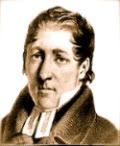
Lars Levi Læstadius was born on October 1st, 1800 in Swedish Lapland near Arjeplog. He was partly of Sami ancestry and was born into a family which had a history of pastoral ministry. Læstadius received his first ministerial training from his older brother Karl Erik who was a pastor in Lapland. He also had an intense interest in botany, which he studied at Uppsala University, where he proved to be a brilliant student. Læstadius decided to study theology and was ordained in 1825. He first pastored in Arjeplog where he married a local Sami woman, Brita Cajsa Alstadius, with whom he had twelve children. He soon moved to Kaaresuvanto, close to the Finnish border. At that time Lapland was nominally Christian. Drunkenness and immorality were common and the Finnish settlers only increased the corruption by their sale of liquor and their dishonesty.

When Læstadius became pastor of Kaaresuvanto, he performed the regular duties of a minister but he had no faith, and was unconcerned even for the salvation of his own soul. In 1831 he became seriously ill and almost died and in 1838 his son, Levi, died. These experiences seem to have softened Læstadius' heart and prepared him for a true conversion to Christ. He began to see the miserable condition of his flock and began an energetic struggle against the use of alcohol, which seemed to be the chief cause of misery in Kaaresuvanto. He struggled in vain by his own power to better the condition of his flock but no real results were achieved.

In the winter of 1844, Læstadius went to the Osele district of Lapland where he met a group of people called the "Readers." The Readers were a pietistic revivalist movement who, like John Wesley, had been influenced by the Moravians. There he met a Sami woman named Milla Clementsdotter who told him of her conversion to Christ. It was at this time that Læstadius seems to have first been converted. He wrote, "Only then I understood and saw the way of life. It had been hidden from me until I talked with Milla. Her simple story of her wanderings and experiences made a deep impression on my heart, and the light was revealed to me. I experienced the foretaste of heaven that evening which I spent with Milla."

Læstadius brought a new zeal to his parish. His sermons became straitforward, relentless calls to repentance. An example of Læstadius' new preaching, where he confronted his parishioners boldly, can be found in a sermon preached in 1857 where he says, "The drunkard’s favorite god is the visible flowing liquor, rum, or whatever his name may be, which we call the devil’s shit, for the devil teaches people to ruin God’s grain and to make it harmful to body and soul. The people who drink it become animals." Later in the same sermon is a powerful proclamation of the gospel: "Therefore, give God the glory, doubting and heavy-laden souls, and you will be allowed to see the brightness of God’s glory. Believe as a sinner and glorify the Lord Jesus with your confession, and with an unveiled face you will be allowed to view the brightness of the Lord’s glory and those glorious mansions in the kingdom of glory. Believe and glorify by your confession the King of Zion, who has won the kingdom with his bloody warfare. And into this kingdom he calls all penitent harlots, publicans, whores and thieves, those whom self-righteousness has condemned to hell, those oppressed by the law, those heavy-laden with the burden of sin and those who are laboring. He sends his servants to call the good and the bad to the joyous wedding that he has prepared in this kingdom."
Læstadius proclaimed the good news of the crucified "bloody Savior" and of the grace and forgiveness in his atoning and redeeming work. The laity were surprised at the change in their pastor. Some mocked him but many were convicted of the need for salvation. After a year of his new preaching of repentance, a Sami woman began to praise the Lord in a loud voice in the normally reserved church-service. She was Læstadius' first convert. At that same moment, an earthquake was felt. Læstadius understood the earthquake as a sign from God. After this event, many others began to powerfully experience the working of the Holy Spirit. They began to praise God, leap and clap their hands in church. They began to exhort unbelievers to repent and many began to receive visions. There were also manifestations, called "liikutukset" in Finnish, not unlike those reported in American revivals, where people would cry and wail loudly and roll on the ground.

The revival began to spread from Kaaresuvanto to the neighboring parishes in Sweden, Finland and Norway. As a result of growing family and economic difficulties, Læstadius was forced to move to another parish further to the south. In 1849, Læstadius preached his farewell sermon in Kaaresuvanto. Hundreds wept during the service and a miracle seems to have occured at this service, during the height of the revival. Water began to flow from the altar. Several young men climbed to the roof to find the source of the water but none was found. Said one of those who witnessed the miracle: "God gave us, thirsty whelps of grace, a clear sign that He will graciously let rivers of living water flow into our hearts from Jesus."

Læstadius moved to Pajala. There he received much opposition. Complaints were made to the governor and to the consistory where Læstadius was accused of preaching "brimstone" sermons and of causing congregants to fall into the disrupting "liikutukset." To avoid annoying the unconverted, two services were held, one for the converted who easily fell into "liikutukset" and one for the unconverted. Despite the opposition, the revival continued to spread largely through the work of lay preachers. Læstadius wrote sermons for these lay preachers and sent them to areas where he could not go.

In the last period of his life, Læstadius remained in the background of the revival. His "disciples," the lay preachers, were now doing most of the work including preaching their own sermons. Læstadius died on February 21, 1861. When he felt death approaching he said, "The Savior comes to receive me with open arms, and guests from heaven come to take me to be with them."

Lapland was a changed place when Læstadius died. Alcoholism had once been an epidemic among the Sami and the settlers. Prior to the revival, about 6000 gallons of liquor were consumed every year in the Jukkasjärvi parish. In 1850, not one drop of liquor was to be found in the whole parish. Among the 2500 people of the Tornio district of Lapland, there were in 1853, only two persons who habitually used alcohol. Vanity among the rich decreased, women sold their jewelry and gave the money to the poor and literacy was also greatly increased. According Saarnivaara, all of these outward changes were unimportant compared to the fact that, "hearts were turned to God and experienced God's grace, which made new men of sinners. They had peace and joy in Christ in their hearts, and they sought those things that are from above."

Friday, July 20, 2007

Apostolic Lutheranism: Introduction

Since getting a site meter and seeing how much of my blog traffic comes from google searches, I’ve decided to write on a subject about which there is not much information on the web. It is also a regional issue (for Battle Ground, Washington and North Clark County) and the subject is religion so it fits well with my blog.

The subject is Laestadianism or Apostolic Lutheranism. North Clark County, in which Battle Ground is the largest city, has a large population of Apostolic Lutherans. They are mostly of Finnish descent. There are some different groups in the movement but the largest group in this area is the Old Apostolic Lutheran Church, a fundamentalist*, restorationist and, I would say, heretical Lutheran movement. They are usually called just “Apostolics” but two other, probably more popular names, are used. These are “bunhead” or “bunner.” The reason for this name is that most of the Old Apostolic women wear their hair in buns. I find the name “bunhead” to be too derogatory sounding but I am good friends with an ex-Apostolic who doesn’t see any problem with the term, at least when used by those who are or have been in an Apostolic Lutheran church. Other attributes of Apostolics are that they tend to have very large families, often of at least ten children and when they greet each other they say, “God’s peace.” Some of the funnier cultural characteristics of Apostolic Lutherans are that they tend to drink a lot of mountain dew, which in Battle Ground is also known as “bunner-beer” and many of the Apostolic young people have been known to wear almost exclusively quiksilver brand clothing. In Battle Ground the Apostolic young people are also known for hanging out in large numbers in the Fred Meyer's parking lot.

Most of the Apostolics I’ve known have been very kind people. I went to the church once with a good Apostolic friend when I was in middle school. All of the ex-Apostolics I know are fervent followers of Jesus Christ who have accepted the fullness of the gifts of the Holy Spirit. There are serious problems with the Old Apostolic Lutheran Church, though, and most of the ex-Apostolics I know would question whether many people in that church are actually even Christians. I trust these ex-Apostolic's judgment. I believe that the revival in Lapland which gave rise to Apostolic Lutheranism was a true act of God but since that time the movement has gone far wrong. This blog post will begin a series on Old Apostolic Lutheranism. My goals in this series are to shed light on a subject that I think many people in Clark County would find interesting but more importantly to reach out to Apostolics who are in a dark place and to let them know that the power of Christ is real and that it brings freedom and joy. My primary resource will be “The History of the Laestadian or Apostolic Lutheran Movement in America” by Uuras Saarnivaara. The book was kindly given to me by an Apostolic man whom I befriended while I worked at Barnes and Noble. I find part the preface of the book to be a good introduction to this series:

…God has led thousands of people to the saving knowledge of Christ through the Laestadian revival. But at the same time the powers of evil have endeavored to destroy this work of God and to break the bond of love between the children of God. Consequently the history of the Laestadian movement is an account of the great saving work of the Holy Spirit in its[sic] conflict with the deluding and disrupting work of the devil. A study of this history therefore brings to us both joy and sorrow.

*I hesitate to use the word "fundamentalist." Its definition is ambiguous and some liberals would probably consider me to be a "fundamentalist." One definition I've heard which I like is that a fundamentalist is any religious person who is more conservative than you are. When I use the word here I am referring to a highly legalistic way of living where the teachings of church eleders are not to be questioned.